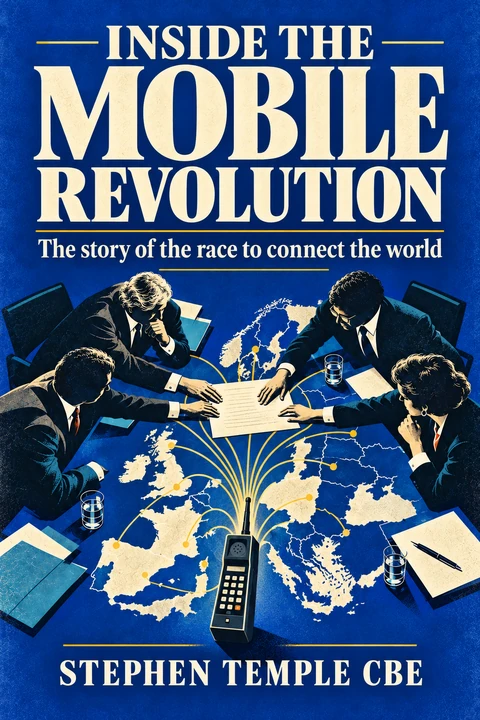
Inside the Mobile Revolution
Stephen Temple’s first-hand account of GSM and the people and decisions behind the mobile revolution.
DRAFT FOR REVIEW · Introduction, chapter teasers and rights notice awaiting Stephen’s approval.
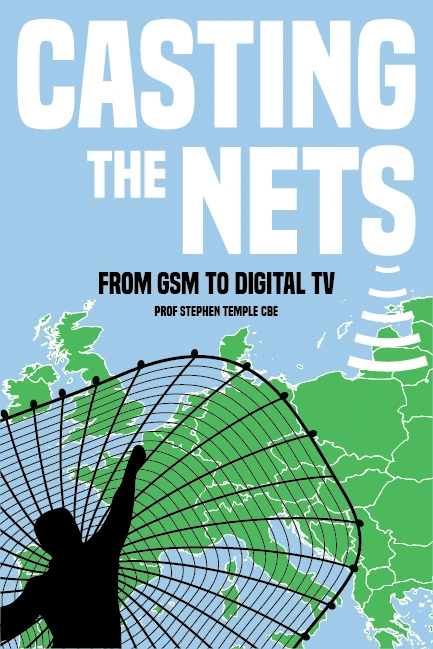
From GSM to Digital TV — the battles, breakthroughs and near misses
The connected world did not arrive by a straight road. Behind mobile phones, digital television and broadband were people with competing ambitions, difficult choices and opportunities that could easily have slipped away. In Casting the Nets, Stephen Temple draws on his own part in major decisions and his close working relationships with the people shaping them. He takes readers into the arguments, alliances and unexpected turns that carried communications from an expensive privilege into everyday life.
For Kindle, send the EPUB through Amazon’s Send to Kindle service.
PDF and EPUB editions are in preparation; downloads are unavailable.
Explore the book
We think of the digital world as a single revolution. Yet mobile phones, television, radio and the internet each followed a very different path. Did one breakthrough trigger another, like falling dominoes? Or were the real connections between the people, political battles and unexpected decisions behind them? Follow these seven stories to discover how the digital world came together.
When mobile telephones belonged to a privileged few, the idea of connecting people rather than cars opened a different future.
A new desk at the DTI, a departing colleague and a crowded international agenda: the beginnings of a much larger undertaking.
French and German research programmes were gathering pace. How could Britain’s manufacturers find a place in the emerging European project?
An invitation to cooperate posed an awkward choice: influence the project from within, or risk committing too soon.
In Berlin, agreement on a permanent team quickly became a contest over who would lead it—and whose ideas would prevail.
A conversation over dinner offered a route into European cooperation. Turning that opening into an agreement would take more than goodwill.
Finding the right person was only half the task. A discreet telephone call opened a delicate campaign for support.
Analogue mobile services were booming. Their appetite for radio channels threatened the space reserved for a system still being built.
Technology choices became industrial politics, drawing ministers and European leaders into the struggle over GSM’s future.
The field trials promised answers. First came a more difficult question: what should count as the winning result?
A request to borrow radio channels sounded temporary. Its consequences for the European project could be much harder to reverse.
Before positions hardened, one last comparison tested the case for the competing systems that would meet in Madeira.
A meeting on an Atlantic island became the setting for a decision that could unite Europe—or leave its mobile future divided.
After Madeira, carefully judged approaches to France and Germany met old grievances and new complications.
An industrial roadshow set out to overturn the emerging consensus. Behind the technical arguments, diplomacy became decisive.
A midnight discussion over whisky brought Britain’s frequency dispute into the open. A minister would have to find a way through.
With an election campaign under way at home, a ministerial meeting in Bonn offered a chance to turn fragile cooperation into commitment.
In Venice, the challenge was to write an agreement that could make competitors work together without extinguishing competition.
New mobile ideas were multiplying. The harder challenge was finding a route from promising technology to a mass market.
A competition for new operators raised a pointed question: should an established contender be allowed to bypass it?
The next mobile revolution depended on more than an engineering breakthrough. Spectrum and competition supplied their own explosive force.
A buzzing hearing aid revealed a problem nobody had intended. Success brought consequences beyond the original plan.
Europe risked locking itself into an analogue television future. A narrow window opened for a very different direction.
The DTI did not control broadcasting policy. An open brief and a willing industry contact offered a way to begin.
A Broadcasting Bill became the battleground for a deceptively simple question: who should decide what viewers could watch?
A move from Whitehall into cable television brought new ambitions, risks and a fresh encounter with the realities of digital TV.
More room for programmes appealed to the BBC. Other broadcasters saw a new bill to pay. A digital radio policy had to confront both.
Always-on broadband was stirring in America while Britain remained comfortable with dial-up. What would get the UK moving?
A few lines in a European policy paper opened the possibility of a new standards institution—and a different way of working.
From the chair of a crowded assembly, turning a vision into a working institution required listening, judgement and timely coffee breaks.
Headline-grabbing speeds pulled attention towards very high frequencies. The debate over coverage would help change 5G’s direction.
A worldwide satellite plan promised fair shares of the sky. Reconciling equal opportunity with extravagant demands was another matter.
A patent dispute that seemed containable spread across industries and borders, testing the limits of European cooperation.
A digital telephone initiative once seemed certain to succeed. Divergent standards and lost time tell a more complicated story.
After decades of breakthroughs, difficult decisions and costly mistakes, what lessons should policymakers remember? Stephen Temple draws on his experience to set out ten rules for keeping a nation's telecommunications infrastructure world-class.
Stephen Temple acknowledges the family, friends and colleagues who helped bring this book into being, along with the permission that made its publication possible.
A long-time friend who worked for me at the Department for Trade and Industry (DTI) used to tell people who marvelled at what I’d achieved with the Global System for Mobile Communications (GSM)… ‘You should see his list of failures!’ A fair point or an unrealistic view of innovation in high technology?
There are many reasons why things fail, but the most common is to miss the ‘time window’ for change. Too soon and nobody is ready to listen; too late and something else has filled the space. It sounds simple to get right, but it is not. If things are not already moving before it becomes obvious that the time window has opened… it is already too late. Success requires a willingness to anticipate and take risks.
The biggest difference I observed working in the public and private sector was the attitude to risk. In the Civil Service, every failure tends to be picked up by the political opposition and the media to attack the government of the day. In the private sector, shareholders and the media are generally more tolerant of failure providing the company gets enough things right to sustain profits. It leaves the public-sector risk averse and seeking evidence before making decisions. But evidence can only come from the past, and disruptive technology always comes from the future.
The period 1984–2004 was characterised by the UK government and private sector looking to the future, taking the risks, improving their own luck by working cooperatively together and moving fast enough to hit the time window for change. They may not have got everything right, but they got enough things right to successfully forge Britain’s ‘digital edge’ for the next generation to have their chance to make a success of the digital age.
Describing the role of government and companies in these large initiatives never adequately reveals what goes into delivering successful outcomes. Things never go to plan and often there are conflicting plans that pull in different directions. It comes down to the leadership of individual people and their integrity, relationships, determination, energy and flair for creative solutions. All these qualities were needed to turn some near disasters into successes with the various digital technology initiatives and, in the case of GSM mobile technology, into global dominance and the emergence of a trillion-dollar industry.
The accounts in Section A provide “real world” insights into the machinations that go on behind the scenes to create the conditions for success. I picked-up many of the insights guiding my decisions from the very smart colleagues I was privileged to work with along the way. It therefore proved to be quite challenging, after completing the accounts, to stand-back and identify the most important insights and compress them into a general philosophy for successful infrastructure interventions. The result is presented in Section BThe Ten Rules – the ten rules for policy makers to keep a national telecommunications infrastructure world-class.
Professor Stephen Temple CBE FREng CEng FIET
More from the collection
Stephen Temple’s first-hand account of GSM and the people and decisions behind the mobile revolution.

A challenge to the way Britain manages its airwaves—and an argument for a different approach to mobile infrastructure.
Read more →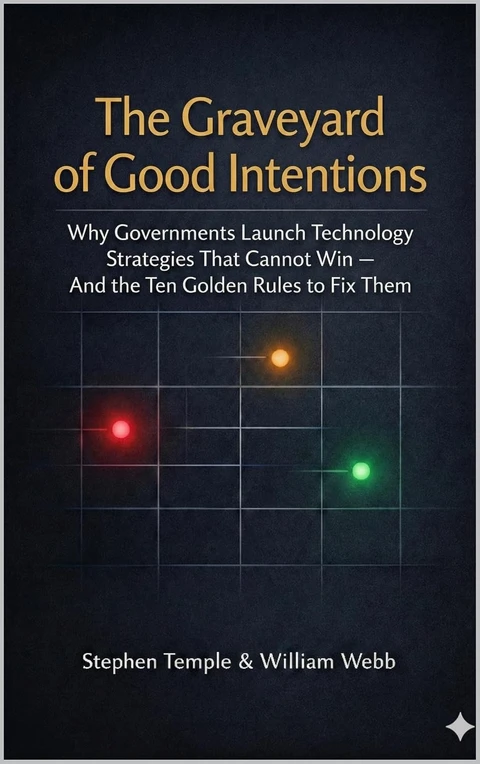
Why ambitious government technology strategies fail, and the lessons that could give the next one a better chance.
Read more →