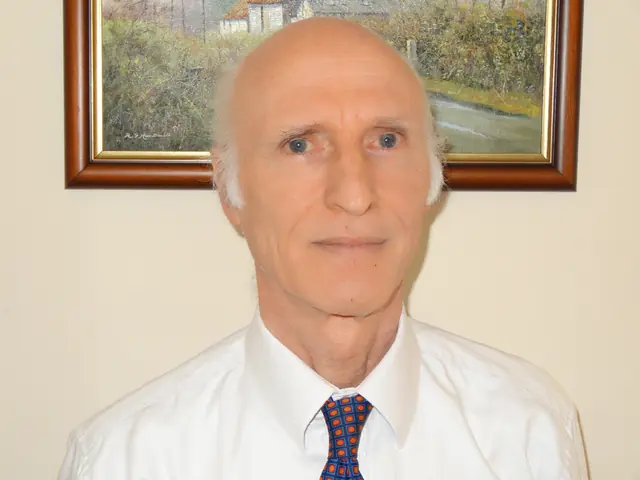
Stephen Temple
Engineer, policymaker and eyewitness to the mobile revolution
Introduction
Stephen Temple is an engineer and former senior telecommunications policymaker whose career has taken him from radar and satellite systems to the agreements behind GSM and the transition to digital broadcasting.
At the Department of Trade and Industry, he helped turn the ambition for a common European mobile system into commitments that operators could act on. His later work in industry and at the University of Surrey has kept him involved in the questions of technology, spectrum and public policy that shape successive mobile generations.
GSM History draws on that experience: the meetings he attended, the people he worked with and the documents he helped produce or preserve. His first-hand accounts sit alongside those of colleagues and the original records, showing how a collective achievement emerged from decisions that were far from inevitable.
Positions held
Professional appointments
- 1961Technician apprentice; later systems engineer, Radar DivisionMarconi Wireless and Telegraph
- 1968Satellite Systems EngineerMarconi Space Division
- 1971Main Grade Engineer — satellite spectrumMinistry of Posts and Telecommunications
- 1977Principal Professional and Technology OfficerCivil Service
- —Deputy Director of Engineering, Directorate of TelecommunicationsHome Office
- 1984Director of Technical Affairs, Telecommunications DivisionDepartment of Trade and Industry
- 1988First Chairman of the Technical AssemblyElected appointment alongside DTI responsibilitiesETSI (European Telecommunications Standards Institute)
- 1991Head of sponsorship of the telecommunications, radio and broadcasting industries (Grade 4)Department of Trade and Industry
- 1996Director of Advanced Technologies; later Director of Technology Strategy and Managing Director, Networks DivisionNTL
- 2003Director of Special Projects, Group Corporate StrategyVodafone
- 2013Visiting ProfessorUniversity of Surrey
Awards and Recognition
- 1994 — Prize for international communications (IEEE)
- 1996 — Commander of the Order of the British Empire (CBE), for services to trade and industry (UK honours system)
- 1996 — Chairman’s Award for Outstanding Achievement (GSM Association)
- Fellow (Royal Academy of Engineering)
- Fellow (Institution of Engineering and Technology)
Read Stephen’s accounts


Personal
Stephen lives in Surrey with his wife, Jocelyne Temple, and is a Visiting Professor at the University of Surrey. His parents were Jack Temple and Blanche Temple. He and Jocelyne have three children, Phillip, Christopher and Mark, and seven grandchildren: Jack, Maria, April, Flyn, Kian, Rye and Xy.
Biography
From engineer to policymaker
Stephen began his career in 1961 as a technician apprentice at Marconi. He worked in radar and satellite systems before joining the British Civil Service in 1971, initially working on radio spectrum for satellite communications.
It was an introduction to a problem that would recur throughout his career. New communications technologies needed access to frequencies that were often already being used by someone else. Finding room for innovation meant understanding the engineering, but also negotiating with existing users, other government departments and neighbouring countries.
By the mid-1980s, Stephen was working at the Department of Trade and Industry, where those skills would become central to the creation of a common European mobile system.
The agreement behind GSM
The ambition was straightforward: a mobile phone should work across national borders, using a common technology. Achieving it was anything but straightforward.
European countries had different networks, commercial interests and priorities. Even when engineers could agree on a technical solution, operators still had to commit to using it.
In 1987, Stephen drafted the GSM Memorandum of Understanding. Through that agreement, European mobile operators committed to a common digital standard and a timetable for introducing their networks.
The document did not invent GSM. Its importance was that it helped turn a technical ambition into a coordinated undertaking that operators and manufacturers could act upon.
Stephen also led the UK's contribution to establishing the European Telecommunications Standards Institute (ETSI) and became the first chairman of its Technical Assembly.
Another important contribution followed through the British Government's Phones on the Move initiative. Opening the 1800 MHz band to personal communications networks helped create space for greater competition and smaller, more affordable mobile telephones.
Beyond mobile phones
Stephen's work was never confined to cellular radio.
During his government career he was closely involved in the policies that helped Britain move towards digital terrestrial television and digital audio broadcasting.
After leaving the Civil Service, he joined ntl, where his work encompassed broadband Internet access, digital cable television and eventually the management of the company's networks division.
He subsequently worked in Vodafone's Group Corporate Strategy organisation.
These roles gave him experience of communications decisions from different sides of the table: first inside government, then inside the companies expected to invest in and deliver the services.
Returning to the spectrum question
The questions that had occupied Stephen during the early mobile years returned with 5G.
As a visiting professor at the University of Surrey's 5G Innovation Centre, he worked at the intersection of technical research, regulation, spectrum policy and government strategy.
He proposed a three-band approach to Europe's 5G spectrum needs, recognising that a national network required a combination of widespread coverage and additional capacity, rather than relying on a single frequency band.
The approach became part of Europe's 5G spectrum planning.
His subsequent work has continued to examine the relationship between new technology, spectrum, investment and public policy, including the questions surrounding the development of 6G.
Explore further
Contact: stephentemple.surrey@gmail.com