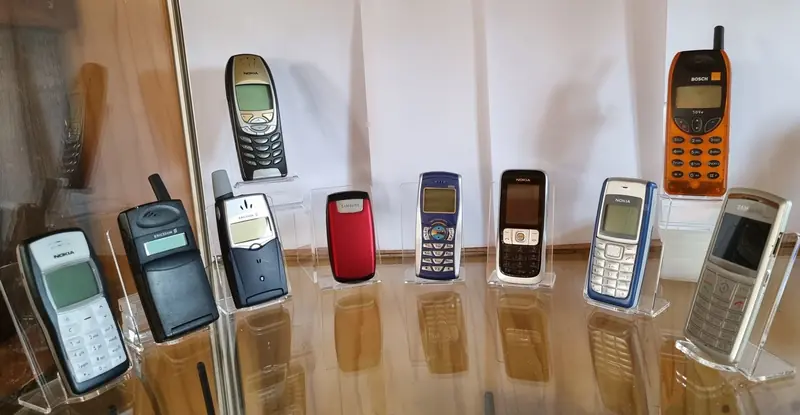
The GSM History collection
Mobile Phones
Ways to explore the devices that brought the mobile revolution into everyday life.
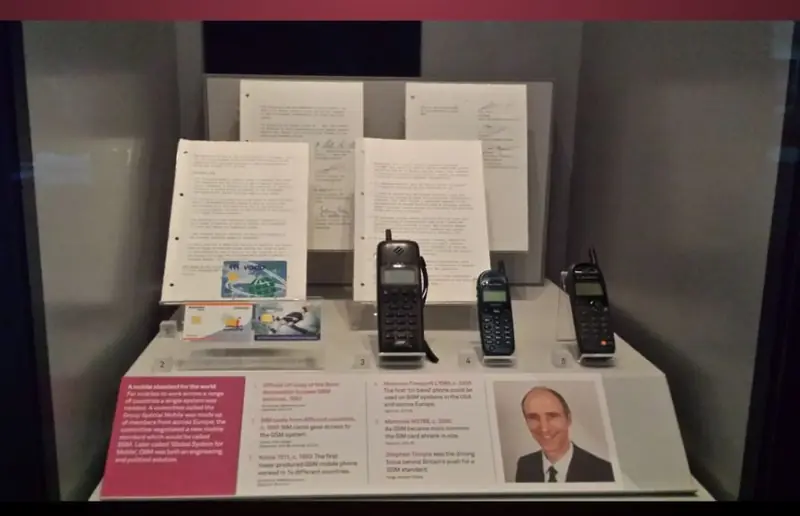
Videos
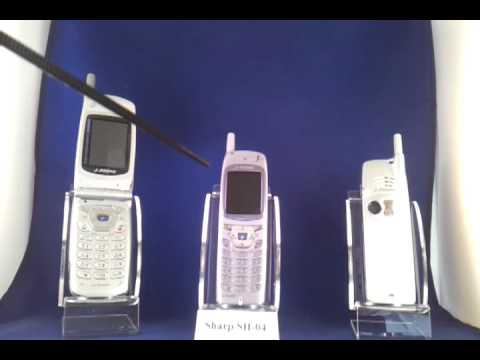
Sharp J-SH04
Take a closer look at the Sharp J-SH04 in Stephen Temple’s video from the collection.
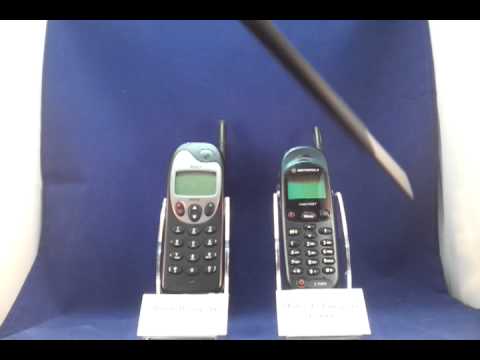
Motorola Timeport
Explore the Motorola Timeport in the collection’s video about a tri-band phone for travellers.
Memorable Mobiles
Technophone EXCELL PC105T From hand to pocket
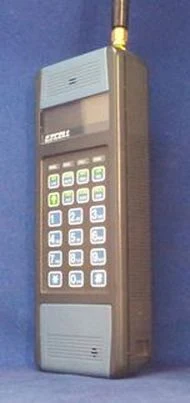
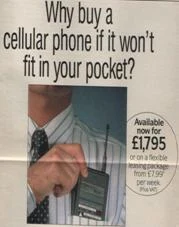
Technophone was a company set up in 1984 by Nils Martensson, a Swedish radio engineer who left Ericsson to set up on his own in 1978. Nils Martensson’s dream was to transform the large, clunky”brick” into the world’s first mobile phone to fit into the pocket. He secured a DTI R&D grant, brought as much computer technology into the mobile phone as the state of the art would allow (including soft keys) and the PC105T arrived on the market in 1986 with a price tag of £1990.
The mobile phone actually did fit into a Marks & Spenser shirt top pocket, as the advertisements at the time illustrated below:
The technical challenges were enormous and during the development phase Nils incentivise his development engineers to reduce the power drain with a cash bonus for every mille-amp of current reduction they managed to achieve. Bit by bit the technical issues were resolved and the phone sold through Excell Communications as the Excell M1 (an example is in the New Information Age Gallery of the Science Museum in London).and then the M2 that went on to sell in large numbers.
The Technophone PC105T was an extremely influential phone in the history of mobile radio for three reasons:
(i) Just as the Motorola brick had taken the mobile out of the car and into the hand so the Technophone PC105 directionally took the mobile phone out of the hand and into the pocket
(ii) It was the phone that inspired the DTI to see the future of the mobile phone as a mass consumer item and this shaped both GSM and led to the seminal DTI Phones on the Move that ushered in the conditions for the personal mobile phone. (See Inside a Mobile Revolution – The Political History of GSM Chapter 19)
(iii) By 1991 Technophone was Europe’s second largest mobile phone manufacturer by handset volume after Nokia. In that year it was bought by Nokia… positioning Nokia as the Number 2 mobile supplier in the world after Motorola…and well positioned for greater things.
Nokia N92 A vision of mobile TV
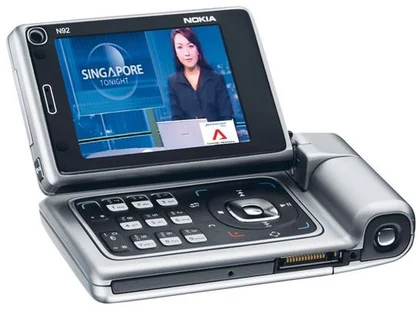
In South Korea mobile television made enormous headway driven by advances in the quality of screens. That extra detail made the pictures watchable on small screens. Both public terrestrial and satellite mobile TV services were launched. This is where to look for the pioneering mobiles designed for mobile TV. It is an important gap that still needs to be filled in this account of the evolution of mobiles.
Nokia went to enormous efforts to get mobile television off the ground in Europe based upon the DVB-H mobile television standard. Alcatel even had visions of mobile satellite television. Nokia brought out the N92 as a flag ship mobile to stimulate consumer take-up of mobile TV. It incorporated a DVB-H chip.
The n92 had a rolling 30 second capture of the video that allowed instant replays and a VCR function although this needed a plug in memory card since the mobile itself only had 40MB of integrated storage.
DVB-H networks were launched in Italy, Germany and Finland but lack of radio spectrum blocked DVB-H networks emerging in the UK, France and elsewhere. This in turn depressed the scale economies and mobile TV never really took off in Europe. The space was left for watching TV on a new generation of smartphones via the broadband mobile Internet.
Ericsson R380 Blazing the trail for the smartphone
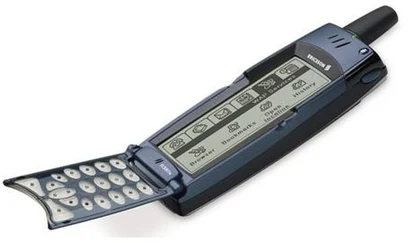
The IBM Simon is recognised as the origin of the smartphone. The prototype personal communicator concept was displayed at the 1992 Comdex Trade Show. But the very first mobile to be called “a smartphone” was the Ericsson R380 brought out in 2000. It incorporated the two key features of today’s SmartPhones: a touch screen and an open operating system.
The OS was the EPOC operating system first pioneered by Psion for its digital personal assistant and thrown open to other vendors to use. It was to lead onto the Symbian OS. However the R380 architecture did not envisage users down-loading their own Apps at that time. So the R380 had more of the character of a feature phone – with its focus on the PDA applications.
The R380s operated on 900/1800 MHz. Another version, the R380, was brought out for the US market and operated on 800/1900 MHz.
It was the first mobile to be marketed as a “Smartphone”.
Samsung SCH-r900 The world's first LTE mobile
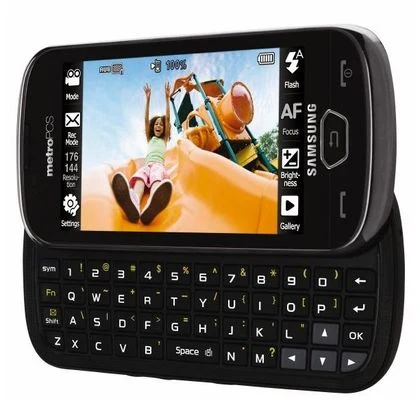
Every 10 years or so mobile technology has made a generation leap…1G…2G…3G. The next step along this global standards path is the Long Term Evolution (LTE) technology. The term LTE was chosen by the standards body as shortly after the 3G standard was introduced, the marketing departments of a number of small companies having proprietary technologies were using the term 4G to try (in vain) to grab the attention of the market. That said we are seeing the term 4G coming back into vogue as an alternative title for the LTE technology. The first LTE mobile introduced into services was the Samsung SCH-r900 on the MetroPCS network it the USA.
This has been followed by a number of LTE mobile phones in 2011 including the HTC Vivid, HTC Thunderbold and Samsung Galaxy SII Skyrocket. A modification of the latter, the Samsung Galaxy SII LTE, was the first LTE mobile in Europe on Swedish TeliaSonera network in 2012.