Chapter 21
GSM’S EXPANDING UNIVERSE
Most technology revolutions have been in the making for quite a number of years before they reach critical mass (the tipping point) and explode upon the world. So it was with GSM and even more so for PCN at 1800 MHz.
It took a long time for my colleagues in Europe to work out what the UK were setting out to do with Personal Communications Networks at 1800 MHz in 1989. They were looking for some hidden technological advance. They couldn’t believe all the hype when all they could see was just another GSM network but running at much higher frequency ranges. I attended several conferences to point out that the real revolution, apart from the vision, was the ‘regulatory gunpowder’ behind it, including releasing enough spectrum to open up an unimpeded road to a mass consumer market and a higher intensity of competition that would drive that revolution forward with increasing speed and force.
In Germany, government officials had their own reason for wanting to believe that Personal Communications Networks were just another GSM network at 1800 MHz. The network operator had been separated off from the ministry in the form of a commercial company called Telekom. This changed the ministry thinking towards issues such as creating more competition in the German mobile radio market. If PCN was something distinct, then, by German law, Telekom had to be given a share of it, and that would diminish the scope for new competition. But Telekom were a powerful lobbying force. It was not completely in the bag.
Another visit had been planned for a DTI Secretary of State to go to Germany. But this time it was Nicholas Ridley. A bit of helpful lobbying on using GSM at 1800 MHz seemed useful, so we put a brief up on the PCN issue.
A curt note came back from his private secretary that he did not understand it. One of my colleagues went up to brief him and got as far as the revelation that it was possible, with a mobile phone, to make a call to the phone on Mr Ridley’s desk. He had got mobile phones somehow mixed up in his mind with walkie-talkies. The state of Nicholas Ridley’s technical education didn’t look promising in terms of his persuading the German minister of the merits of GSM for Personal Communications Networks.
When we got to Bonn, we went straight to the ambassador’s residence for lunch. The lunch was with some very senior German industrialists and officials. There followed a fascinating conversation on the merits of a free market economy, ably hosted by our ambassador, Christopher Mallaby. I had met the ambassador when he was Head of Chancery in Moscow in 1976 and I was a young Home Office official over for a meeting with Russian officials on broadcasting satellites. I was surprised he still remembered me. (I was later to bump into him briefly at Buckingham Palace when I was collecting my CBE and he was to be knighted – which added to the pleasure of the occasion.)
After the lunch, Mr Ridley retired to his room. He came down five minutes before we were to leave for the Telecommunications Ministry. For a few moments, we were alone. It was my last chance for a top-up briefing. Within a minute, we were in animated conversation. He was genuinely interested. The ambassador joined us. He proposed we continue the conversation in the car.
The ride to the Ministry found me in the back of a Rolls Royce, squeezed between the ambassador and Mr Ridley, trying to keep up with Mr Ridley’s demands for ever more detailed explanation of how Personal Communications Networks worked.
When we arrived at the Ministry, Mr Ridley was masterly. He explained to the Germans the key features of Personal Communications Networks and why the GSM technology was the best choice to go for. When he’d finished, he turned to me with a huge grin and a look on his face that could only be read – how did I do? I gave him a discreet thumbs-up.
The Germans adopted our Personal Communications Network technology (but without doubt for their own reasons) and licensed a new operator.
Other parts of Europe moved to follow the Germans. The EU Commission then swung behind the duopoly model, and it became EU policy that there should be a second GSM mobile radio operator in every EU country. In most European countries, a third mobile operator followed shortly afterwards.
In general, this has been the stable model market structure in Europe, with the third player into the market struggling. The exception was Orange in the UK, where their commitment to network coverage and genius for building a great brand pulled them, at one stage, into market leadership in the UK.
The value of these new mobile radio entrants’ being channelled towards the GSM technology cannot be overstated. Whilst the incumbents still had their analogue networks generating revenue and growth, the new entrants were entirely dependent on new GSM mobile handsets coming on stream quickly in order to drive any traffic through their expensive new networks.
Mannesmann in Germany probably did more than any other mobile operator in accelerating the development progress of GSM mobile phones. They had rolled out a £600m network across Germany but could not lay their hands on a single GSM mobile. The mobiles were tied-up with teething problems and lack of type-approved equipment. At the first of the GSM Congresses in Cannes, George Schmitt from Mannesmann Mobilfunk vented his frustration on the supply industry by giving out badges saying that GSM should now stand for ‘God Send Mobiles’.
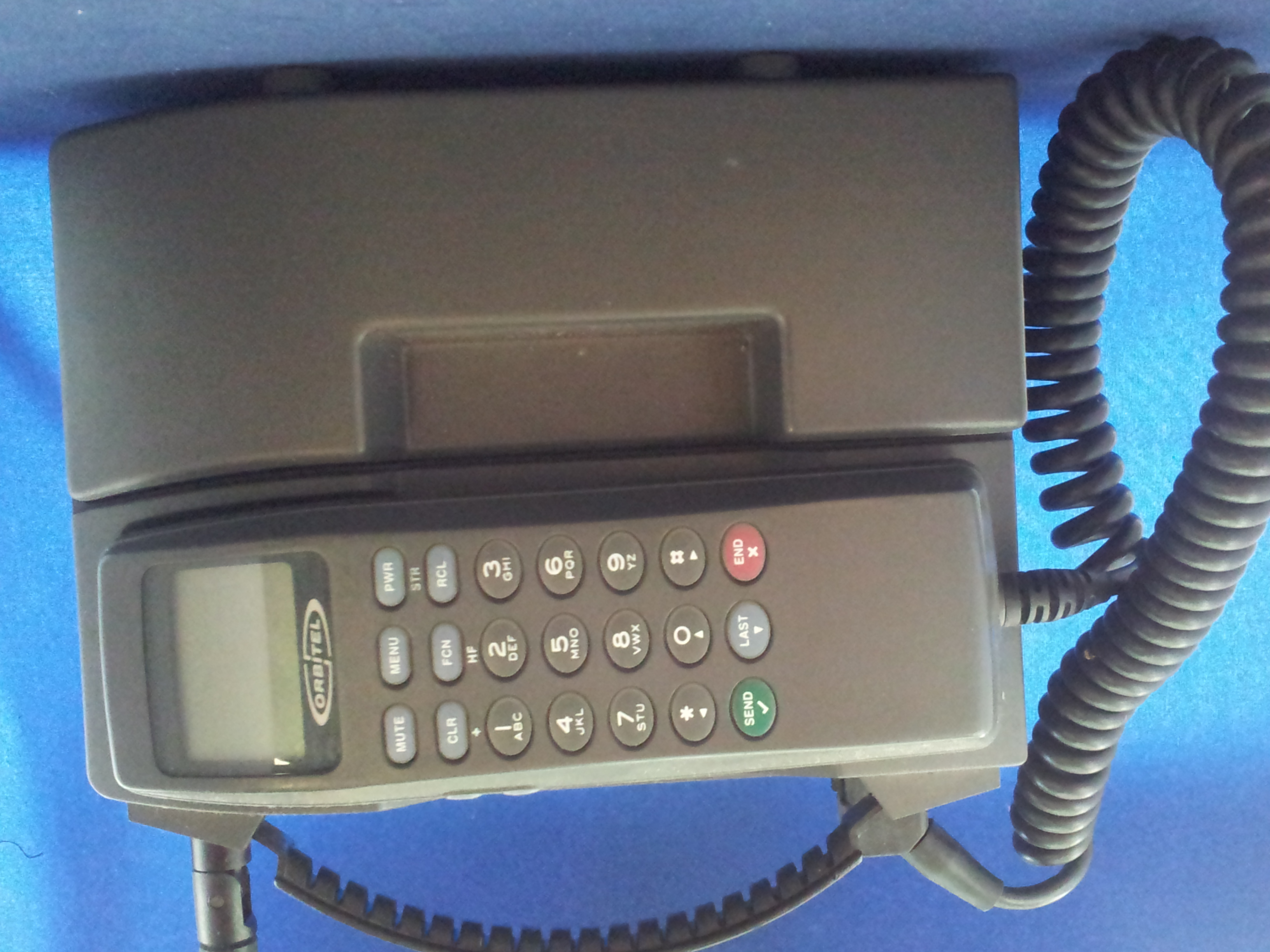
Eventually, the vital GSM mobile phones arrived on the market. The very first type-approved GSM mobile in Europe came from a UK supplier called Orbitel – the joint venture between Racal and Plessey. The UK approval body (BABT) pulled-out all the stops to make this happen. The mobile was the size of a lady’s handbag, and the battery lasted for six hours on standby and had only 30 minutes’ talk time. I made a GSM call in 1991 on this GSM mobile but had to drive to Putney hill to find some GSM coverage. The phone was soon left behind in the mobile race in Europe but according to Orbitel (at the time) continued to sell in some parts of Africa where its huge size turned out to be a status symbol.
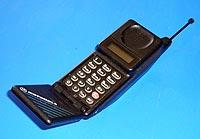
The Motorola GSM version of their ‘brick’ (their model 3200) was launched in 1992 with much more success. It was essential to Mannesmann’s getting their GSM service off the ground. It is the mobile phone most people in the world associate with the launch of GSM.
Motorola hedged their bets on GSM, but much more of their energy went into their new, very small, analogue mobile phone – their MicroTac, an amazing piece of analogue technology for its time. The company view was that the analogue technology would win the mobile handset race in the early ’90s, and they placed their bets accordingly. The Motorola MicroTac was launched in April 1989 into a world of rapidly expanding analogue mobile networks right across the world.
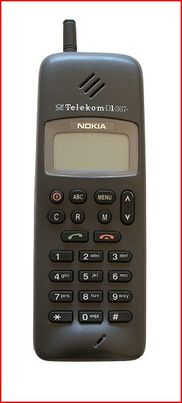
Nokia launched its first GSM mobile phone, the Nokia 1011, on 10th November 1992. The timing was perfect, and the bet well placed. Like a surfer, with a mixture of skill (inspired, intuitive user interface) and luck, they were lifted by the rising GSM tidal wave to global dominance. From 1991 to 2000, Nokia’s number of employees doubled, net sales grew ten-fold, and operating profit grew a hundred-fold.
A tale of two company strategies around the choice of technical standards. By 1997, GSM had up-ended the global mobile phone industrial landscape. Motorola lost its crown to Nokia and was never given the space to reclaim it.
For the next 10 years, GSM mobile phones were generally 18 months ahead of any competitor mobile technology in terms of performance and functions. It was a matter of commercial common sense. If development resources were scarce, then getting a new feature on a GSM phone opened up a much bigger market than getting the same feature on the phone using another mobile phone technology.
The large Japanese multinational companies were completely blindsided by the emergence of GSM. They were tracking US digital cellular radio standards closely and putting a lot of focus on a better version of cordless phone service called PHS (Personal Handyphone Service). They thought the lower cost technology would be a winner in emerging markets in Asia and had time on their side. In the blink of an eye, GSM had swept into China and most of the rest of SE Asia. It was game over for the export prospects for PHS. Japanese industry found themselves scrambling to catch up with companies like Nokia in a product area that should have been a competitive strength for their giant consumer electronics companies.
The hard work of taking GSM outside of Europe was done by the large European systems companies such as Ericsson, Alcatel, and Siemens. We were occasionally asked for political support. For example, I received a government delegation from China in my DTI office to talk about GSM, but the sponsors of the visit were Alcatel.
The first export of GSM outside of Europe came as a complete bombshell. One day, I got a telephone call from Australia. It was Bob Horton. ‘Why had the DTI blocked an export licence for GSM to Australia?’ he demanded with obvious irritation. That was the first I knew that anyone was exporting GSM to Australia. I was mortified and promised to look into it.
It turned out that the UK had finished up as custodians of one of the GSM encryption algorithms. In those days, this fell into the same category as war munitions in respect of export licences. It was really embarrassing that the first country to be refused an export licence was such a good friend as Australia. My next port of call was GCHQ to tidy up this misunderstanding.
This bit of housekeeping cleared the way for GSM to move smoothly outside of Europe, and it did so with ever-gathering momentum.
The last big influence I had over the internationalisation of GSM concerned international roaming. It took me all of 30 minutes to accomplish and was to have a profound impact on hundreds of millions of people travelling abroad every year.
It had always been the DTI intention for the GSM MOU to be a purely commercial agreement between the mobile network companies. It was important to good industrial policy to know when governments should move out of the way and let the private sector take the lead. But Germany, France and Italy had pressurized the DTI into signing the MOU, and so, in good faith, I attended the first few meeting of the MOU signatories. I was there just to listen.
I listened with rising consternation to the first discussions on the principles for charging for international roaming, i.e., people using their GSM phones when travelling abroad. The Italian telephone company were taking the lead in the discussion and putting forward the model that was used in many countries for paging services. For paging service, you paid a monthly subscription of, say, ‘X’ to be paged over a single city. Then you paid ‘2X’ if you also wanted to be paged in a second city. To be paged over the whole of a country would cost a great deal of money. There was a certain logic to this since the product a mobile or paging company was selling was ‘mobility’.
The Italians proposed the same principle should be used for GSM roaming. On top of this, of course, would be the mobile phone call changes themselves. Other mobile phone operators around the table were nodding vigorously.
My mind wandered over how this proposal might play out for me in the DTI. Robert Priddle would sign off my expenses, so I would have to persuade him what level of GSM subscription I would be allowed to buy into. He would probably approve Belgium since I was forever going to Brussels. He would suck his teeth at the thought of Paris or Bonn, and beyond that, I did not stand a chance. I then scaled this up across all the organisations with people who travelled.
It was obvious that several things would happen if the paging tariff model was applied to GSM. There would not be a lot of GSM roaming – so what was the point of aligning the technical standards? Second, since the competition authorities would not allow the mobile phone operators to discuss the actual prices to be charged, a very high-subscription-priced operator in, say, Germany would be suppressing roaming call revenues to a UK operator from visiting Germans. Finally, I thought that a mobile phone would likely prove of most value on unforeseen trips, but the destinations would be typically the countries that were not part of the subscription.
It was not really my role as a government official to comment since this was a purely commercial matter. But it just looked to be so wrong.
During the coffee break, I approached Armin Silberhorn with my misgivings. He said that he could see my concerns, but what was the alternative? My proposal was that ‘the whole of Europe’ should be the normal default roaming area. I asked if I intervened, would he support me? He agreed.
When the meeting recommenced, I asked for the floor. My speech was very political. Officials and ministers from all the CEPT countries had not just gone through hell to break down the technical barriers to roaming across Europe only to see our tariffing colleagues put tariff barriers back in their place. Only for the second time (the first being in Berlin), I thumped my fist on the table as I finished my intervention with the cry ‘One subscription, the whole of Europe’. Only I got a bit carried away with the rhetoric, and this time misjudged the force with which my fist hit the table. All the coffee cups around the room jumped up and fell back with a dramatic clatter. This loud clatter was the unintended cue for Armin to come in with full fury, demanding that there be no backsliding on a European-wide GSM roaming area. It won the day.
It was theatre but driven by a passion on the part of both of us to deliver the vision of what we believed Europe should be aspiring to. This became the basis of GSM roaming across Europe and then to the rest of the world. It normalised carrying and using one’s personal cellular mobile abroad. Life had got that bit easier for hundreds of millions of travellers. It chimed well with a world that was already on a path towards globalisation and has even saved lives.
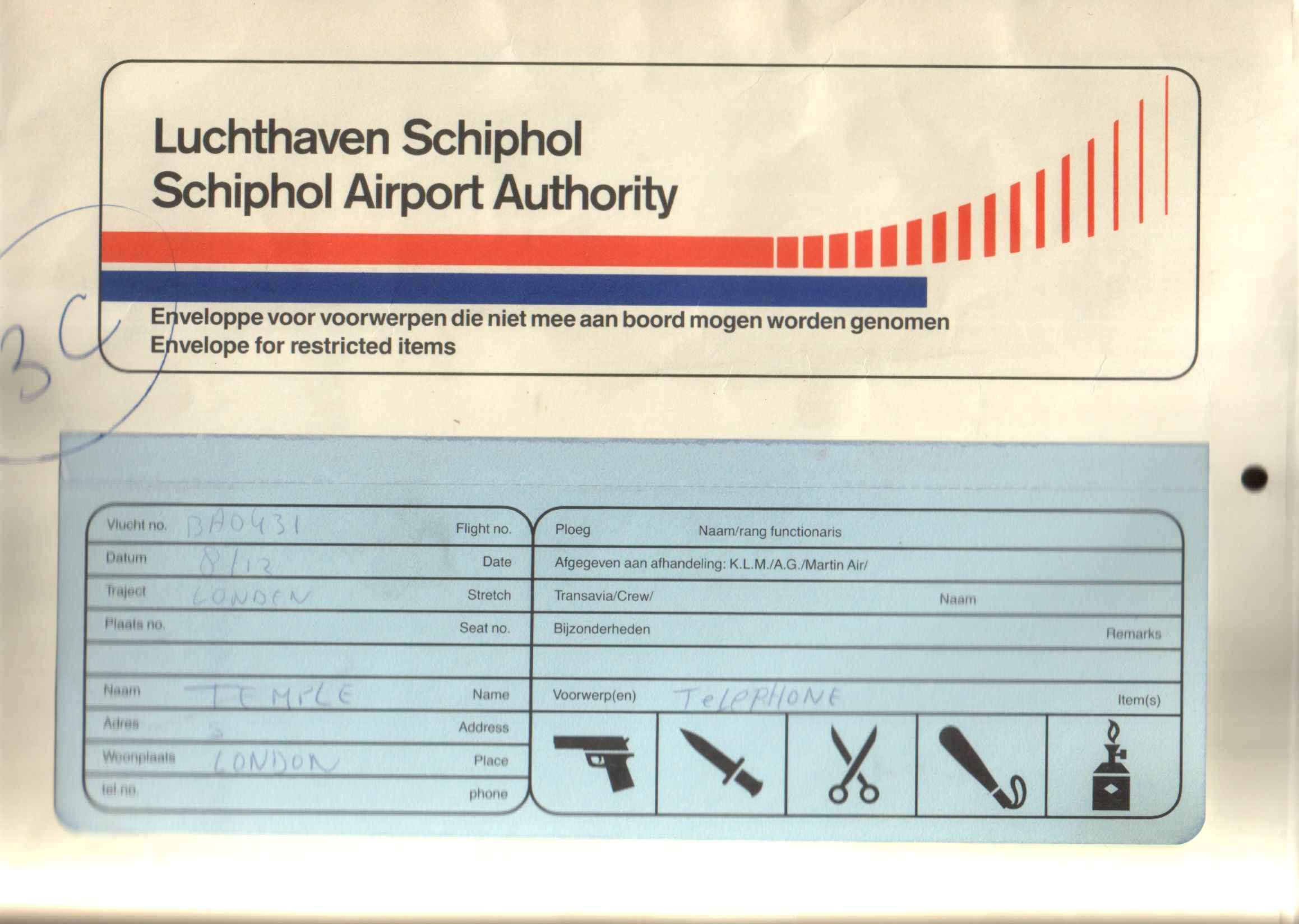
This was not the last of the barriers that had to be knocked down to make it an everyday thing for people to carry their mobile phones when they went abroad. The airport authorities in several countries took the view that mobile phones were a security threat. My early experience of carrying my GSM phone was to have it taken away at both Munich and Schiphol airports, put in an envelope, handed to the cabin crew by security staff and given back to me in London – evidently deemed to be every bit as dangerous as a gun.
It took another call to Armin Silberhorn to gently let Munich know that they were now part of the EU Single Market. The GSM tidal wave swept these restrictions away.
One of the first instances of the safety benefit from GSM was reported in a newspaper just a few years after GSM was launched. Some German skiers in the French Alps were caught in an avalanche. In earlier times, they would have left their ‘national’ mobile phones at home as of no use. GSM changed everyone’s habits and made it a natural thing to carry mobile phones everywhere. They were found by France Telecom engineers position fixing on their GSM phones.
In September 1999, The Sunday Times revealed that one of their reporters, Jon Swain, and his cameraman, Chip Hires, had found themselves ambushed in the Far East by gunmen and had fled down a bank and into the undergrowth. Jon Swain called for help on his GSM mobile phone. I read this article with a quiet satisfaction.
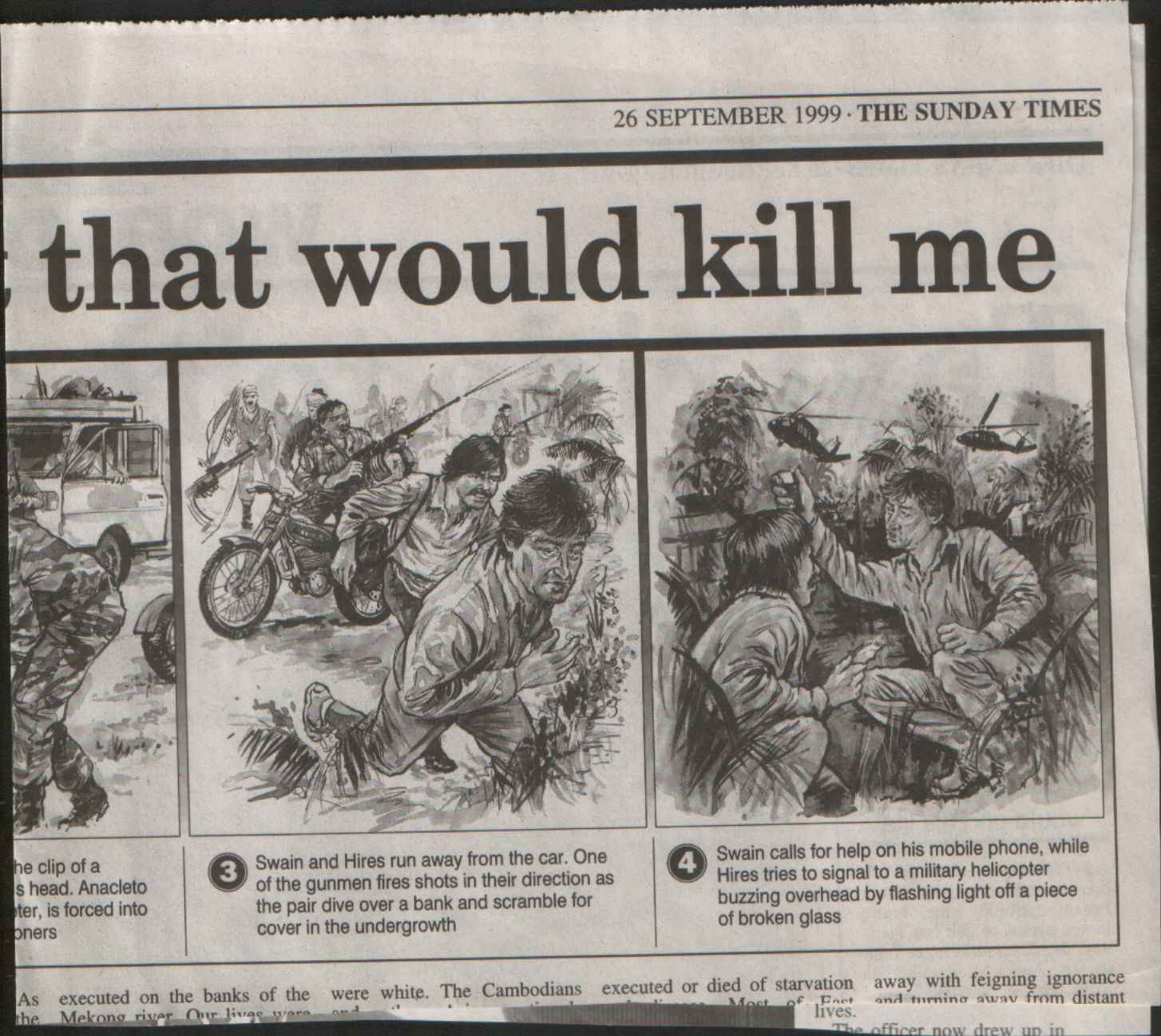
At the other end of the scale from this and other dramatic stories have been hundreds of millions of people getting themselves out of short-term fixes in foreign parts by virtue of the very simple action of getting out their GSM phones, no complexity, no hassle, not even having to think about it… just making the call. There have been even more parents, spouses, friends, etc. having the peace of mind of knowing that the person they care about has with them a GSM mobile phone when travelling abroad. It took Armin and I ten minutes to get the world to move in that direction. It was the right thing to do.