SECTION A – INSIDE ACCOUNTS
Part OneMobile Communications
PART ONE – Mobile Communications
Quote: “Success requires agendas to be aligned, a smart mix of cooperation and competition and going with the flow of the market” (Section B Rule 1)Rule 1 from The Ten Rules
Context
Prior to 1981, the public mobile service was the Cinderella of all the means of communications. It took the left-overs of radio spectrum and was starved of investment by the state-owned telecoms monopolies. That began to change in the early ’80s with the introduction of the analogue cellular radio system. But there was no will in Europe to work together. The result was a patchwork of different technologies and spectrum bands. In 1981, discussion began on a common cellular mobile system for Europe. There had been little progress when I joined the DTI in 1984 and attended my first GSM meeting. Opinions varied between those with ambitions for the common system to be based on their own current analogue standard and those who believed unity would only be achieved by leaping over all the competing analogue standards and going for a completely new ‘digital’ cellular radio standard. Over the next 12-18 months, I was to change my view from promoting the UK’s analogue standard to embracing the need for a second-generation digital standard. In February 1987 the GSM initiative was on the point of collapse. In a breath-taking 37 weeks the whole of Europe (countries and industries) were brought behind GSM in a rare unity and speed.
Chapter 1
AN UNPROMISING START
Mobile phones are commonplace now. In the 1970s, they were associated in the public’s mind with Rolls Royce cars. Not without reason. They cost £5,000 to buy and a lot to run. A truly elitist service. Even at these prices, the British Post Office had a long waiting list of people wanting a service, and it only connected cars to the telephone network and not people.
More radio channels were needed to expand the service. The conceptual breakthrough came out of the famous Bell research labs in the USA. The land would be covered in a honeycomb-cell-like structure of radio coverage areas. The necessary number of radio channels would come from re-using the same channels repeatedly (say every third or fifth radio cell). The idea was presented to the FCC in a paper in 1971 by Joel Engel, Richard Frenkiel and Philip Porter called ‘High Capacity Mobile Telephone System Feasibility Studies and System Plan’.
However, the problem with such a plan was that a car might pass across several such radio coverage cells during a telephone call. What a nuisance if the telephone call was lost each time and the customer had to re-dial the number. Advances in microcomputers provided the practical solution. Calls were automatically handed over from radio cell to radio cell without the customer’s knowing. Cellular radio was born.
The Scandinavian countries were the first in Europe to make a commercial success of cellular radio. The French and German governments tried to organise a joint effort to secure an industrial lead. The idea was for their respective industries to design a new version of the analogue technology and for the two countries to then put it into service. They tried to tempt the UK to join this endeavour. For a brief period, the UK flirted with the idea. But a new thinking was sweeping through the UK. The government was intent on introducing competition at the earliest possible moment. They selected Cellnet (a joint venture between British Telecom and Securicor) and Racal Vodafone (referred to just as Vodafone in the rest of the account) to be the two UK national cellular radio operators. A variant of the established USA analogue technology won the day. Kenneth Baker, the Minister for Information Technology, announced the decision in Parliament. Just to add salt to the wound, Mr Baker sent a letter to the French minister expressing hope that the French would see sense and follow his decision. As it happened, from a purely market-led standpoint, it was probably the most sensible thing that the French government could have done. A very astute French engineer called Philippe Dupuis recognised this. He could see the potential growth in this new market and had been arguing the case within the French Post, Telephone and Telegraph (PTT) administration, i.e., the telephone company) for using an established technology, perhaps the one the Nordic countries had developed. He was a lone voice. Industrial manufacturing strength took primacy in French mobile radio policy. The customers could wait.
The cooperation between the French and the Germans staggered on for a short while. Then the industrial tensions eroded the relationship. Siemens tugged away at one corner and Matra at the other. The dreams of a Franco-German common cellular radio system collapsed. Each went their own way with quite different technical standards. Italy quietly produced a unique Italian system. Others picked up a hotchpotch of standards and frequency channels. A spectacular failure of European standardisation was complete. A consumer wanting to cross the length and breadth of Europe using a mobile phone (which in those days were only car phones) would have found their car filled with so many different equipment boxes there would have been no room for any passengers. The markets were all out of phase, the service focus (with the honourable exception of the Scandinavian countries) was purely national, equipment supply was local to the extent possible, and there was no political ambition to change things.
For cellular radio, the European Single Market seemed a very long way off. In fact, little power resided in the EU over telecommunications in 1984. (Note: it was the EC at the time but will be referred to by today’s title of the EU.) The Commission had no locus and was looking for a way in. Power was firmly in the hands of each country, and the main vehicle for cooperation was the European Conference of Post and Telecommunications administrations (CEPT). The acronym CEPT comes from the French word order of the name.
Those few members of the public who’ve heard of CEPT probably associate it with postage stamps. Its distinctive logo is four post horns. In 1984, CEPT was a loose association of European postal and telecommunications administrations. They met from time to time to discuss common problems and improve ways of working together. On the technical standards side, it used to bring together the experts from the telecommunications operating companies. At that time, apart from the UK, these were state-owned telephone monopolies. International telecommunications depend upon a high degree of co-operation, and one might have imagined that common technical standards were the natural state of affairs. They weren’t, and there were numerous standardisation failures. The huge profits of the telephone operators allowed these standardisation failures to be bridged at international gateways. But technical experts in both CEPT and its international counterpart (the International Telecommunications Union) kept on trying – often in good faith. Too often, particularly in the more competitive areas of technology, the result was a catalogue of different national technical standards put between wrappers and dressed up as a common standard. The core network side fared little better in respect of successful standardisation outcomes.
A working group was set up in 1982 by the CEPT Telecommunication Commission. Its mandate was to harmonise the technical and operational characteristics of a public mobile communications system in the 900 MHz band. It was called in French ‘Groupe Special Mobile’ or GSM for short. The word ‘special’ recognised the complexity of the task and meant a dedicated group was needed rather than parcelling out the different technical tasks across several of the existing CEPT specialist groups. The group was born amid the tensions of establishing the first-generation analogue cellular radio systems. It witnessed the abject failure of European co-operation. The political will was just not there for a serious effort at a common European cellular radio standard.
GSM had its first meeting in Stockholm in December 1982. The early participants realised that the window of opportunity had passed to standardise these analogue systems and optimistically referred to them as ‘interim’ systems.
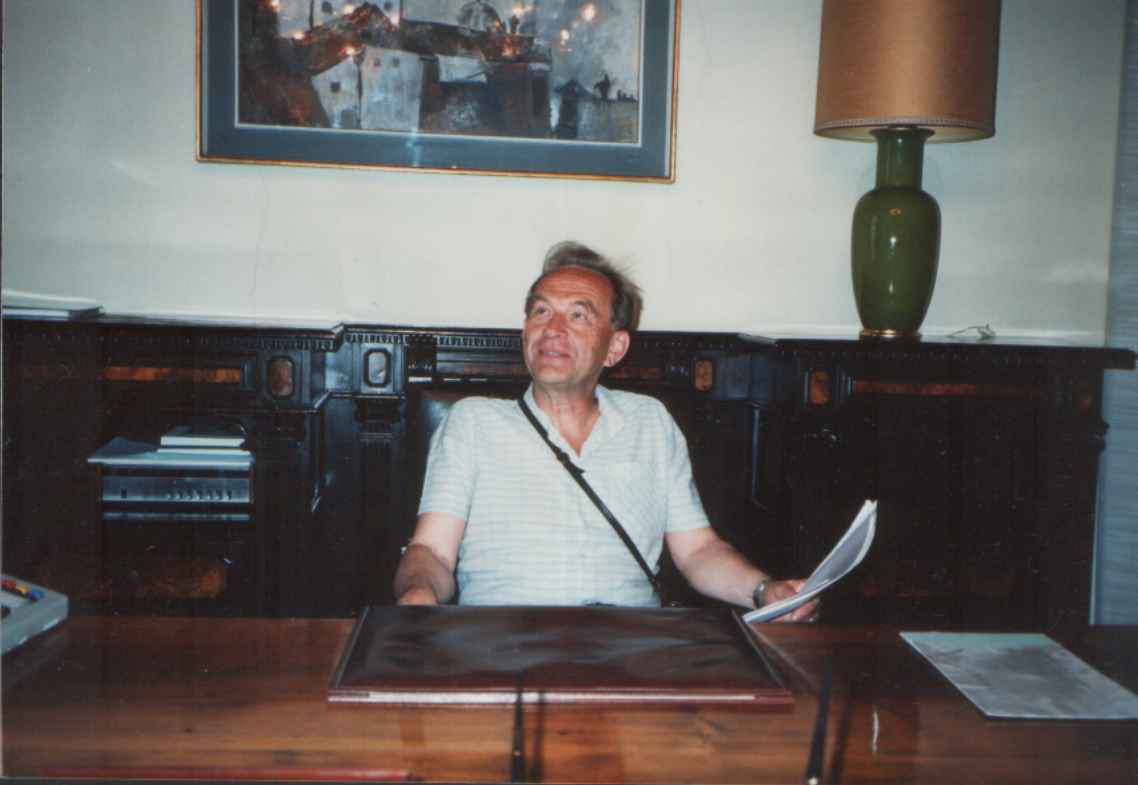
The Chairman of GSM was Thomas Haug from Sweden. He was one of life’s gentlemen. I cannot imagine an unkind thought ever crossing his mind. He also had enormous patience. He would be severely tested in both attributes over the next five years.