Chapter 22
UNINTENDED CONSEQUENCES
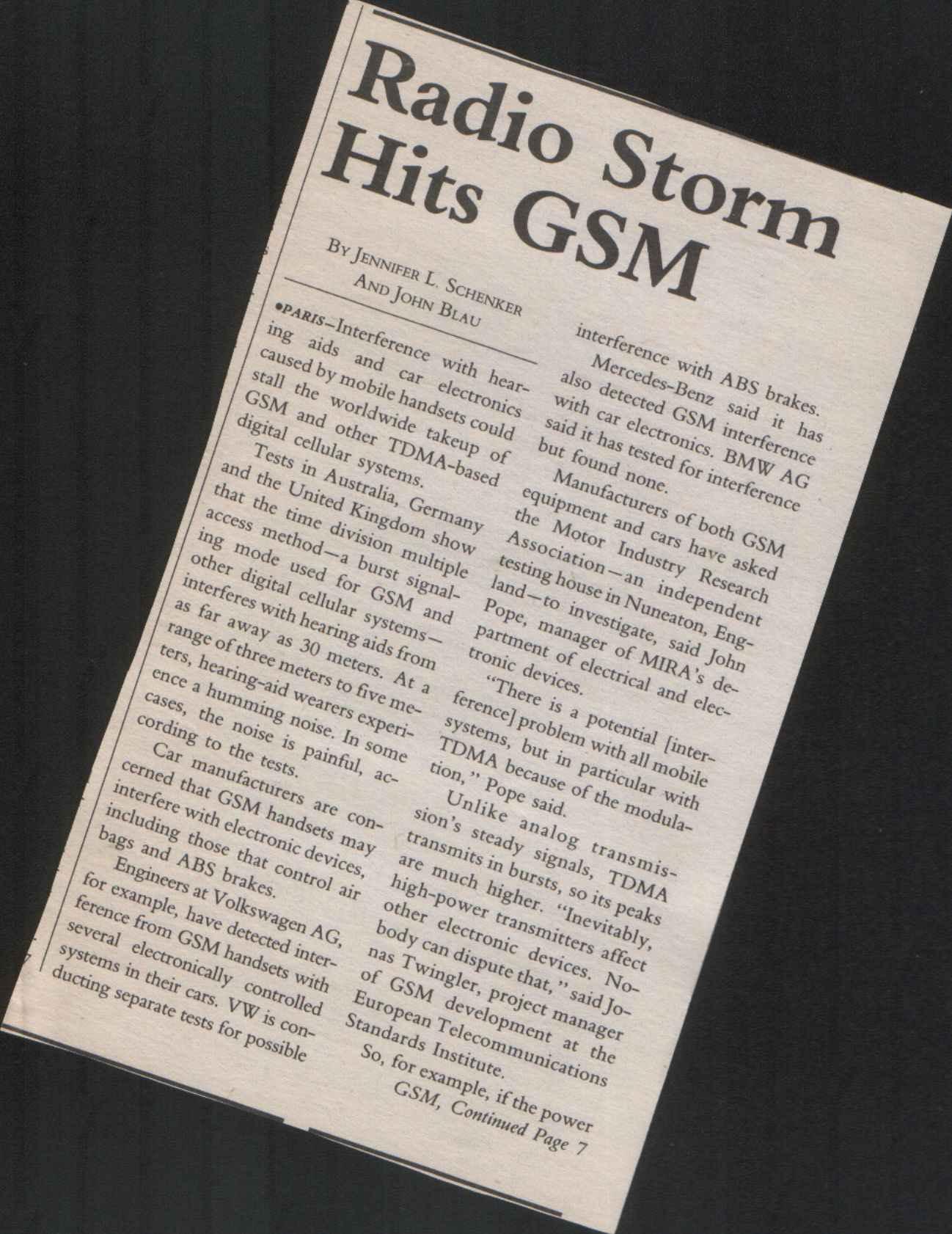
When big revolutions occur, there can be unintended consequences. The first of these emerged around 1989. Somebody in Oftel, wearing a hearing aid, was playing around with a new digital cordless telephone called CT2 and noticed a buzzing in his hearing aid when the cordless phone came too close to his ear. He reported this to the Radiocommunications Division, who were not quite sure what to do. They sent it across to me. I asked British Telecom Research Laboratories to do some tests for us. As an afterthought, I also asked them to see if the same effect occurred with GSM mobile phones, as they tended to work at higher power levels than cordless phones.
They sat a deaf person with a hearing aid in a special room that was deadened to external radio waves, and the digital phones to be tested were each brought forward little by little. The cordless phones certainly did interfere with hearing aids but only when they were very close to the ear. But the real horror story emerging was that the GSM phones cause massive amounts of audio interference at significant distances away – in fact, the BT Research Lab staff member doing the testing had to pull the hearing aid out of his ear, such was the pain from the audio interference.
At first, there was complete bafflement. How could a GSM signal at 900 MHz break through a purely audio frequency device like a hearing aid? The answer was that the pattern of digital data bursts just happened to be at a repetition rate that fell into the audio range of human hearing when it passed through any electronic device that acted as a detector.
We had a problem. A new technology that was going to hit all the deaf people in the UK had all the alarm bells ringing in my mind in terms of political consequences. A colleague from the Radiocommunications Division proposed that we would have to ban GSM mobile phones in the UK market. That was not very practical. The GSM bandwagon was already rolling. Chips were coming out of semiconductor manufacturers, and GSM networks had already been ordered.
The next step was to call in officials from the Department of Health and see what their views were. I was expecting a tirade from them. Their response took us by surprise. It was one of complete indifference. The officials said that deaf people had interference to their hearing aids from all manner of electrical devices, for example, neon signs – he did not think that one more source of interference would matter one way or the other.
I carried on digging into the issue. Some hearing aids were completely immune to the audio breakthrough from GSM mobiles, some were bad, and some very bad indeed. It all depended upon the design of the hearing aid. We quickly pushed the problem onto the European standards body responsible for defining the interference immunity standards for hearing aids.
We reckoned it would take four to five years before GSM mobile phones had penetrated the market in such numbers that deaf people had significant encounters with people using their GSM mobile phones. That would be ample time for better European designs of hearing aids to come onto the market and diffuse out into the population of the hearing impaired.
We were lucky that a chance encounter of a digital cordless phone with a deaf official brought the problem to our attention very early on, and this unintended consequence of the GSM technology was handled with almost no fuss.
We were not so lucky with the next crisis – the first really big health scare in the UK from mobile phone radiation. It was always an issue simmering under the surface with no evidence one way or the other. It crept up a notch with the bringing into use of the 1800 MHz bands that had, at an early time, tended to be called microwaves by some parts of the industry. That, in turn, got linked in the public mind to microwave ovens, where a health scare of leaky microwave ovens had caused sales of these ovens to plummet at one point in time. The 1800 MHz concern had been handled well in my ‘Phones on the Move’ consultation document, and I’d gone the extra mile to satisfy myself that the industry had the means to respond to any future lowering of the RF power safety limits on mobile phones.
All this was to prove insufficient to ward off the dreaded ‘health scare’.
The source of the storm started from an innocent proposal from one of the universities for an R&D project to accurately measure the RF power from a mobile phone held close to the head. The reason was that the ‘human head’ modifies the behaviour of a nearby mobile phone aerial. The proposed research was into how to accurately measure this change. I supported the project
The project was included in a long list of research projects made public. The technical press picked this up and commented that the DTI must be concerned about the health effects of mobile phones to be even studying the matter – and completely missed the point that we were not studying the health effects, only how to accurately measure RF power at close range. The Daily Telegraph picked up on the story with a more alarmist spin.
The blue touch paper was lit when a radio journalist decided to interview one of the university professors. The journalist was a pretty young lady (or so I was told) who lured him into a dissertation on how a radio wave could possibly cause cancer? He had in mind megawatt radars and not low power mobile phones. What was picked up however was that some professor had said that mobile phones could cause cancer – which is not what he had said.
By this time, the DTI press office were being bombarded with press enquiries. We had to get out a press release, fast! But we could not get hold of the expert from the National Radiological Protection Board. He was off-site at a meeting (and no mobile phone). It was neither right nor credible for the DTI to give a medical view.
We missed the window, and the story turned into a full-blown, media-driven health scare. I watched the story spin completely out of control, getting ever more depressed. Finally, the London Evening Standard hit the absolute pits – ‘Cellular radios fry your brains,’ cried the headlines. The only crumb of comfort I could draw was that I could not imagine the story getting any worse. Eventually, we got NRPB to issue a press release. Nobody was listening.
As with most health scares, the public memory is very short. The sheer convenience of the mobile phone has seen it become a mass consumer item, and it is doubtful if many people can even recall the headline of mobile phones ‘frying their brains’. The industry has played its part in funding a lot of research into seeing if there are any adverse health effects. Meanwhile, if mobile phones were safe in 1991, they have got, on average, 10 times safer as mobile networks have got denser and for the concerned, hands-free function has become standard in mobile phones.
A third unintended consequence of GSM was decimating the business case for mobile satellite systems, like Motorola’s Iridium satellite network. The money on these satellite systems was committed before these satellite operators came to realise that they were about to lose a huge slice of their target customer base to GSM networks as the networks came to be rolled out over almost every country in the world.
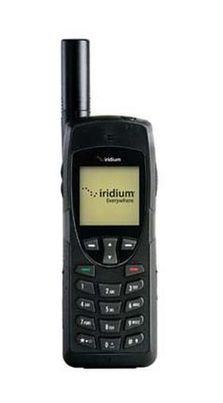
At the end of March 1999, the $5 billion satellite system Iridium had 10,294 subscribers, far short of the 500,000 needed to reach break-even. At midnight on 17th March 2000, Iridium shut off service to their 55,000 customers, and the network assets were sold for $25 million by the end of the same year – about the same time as GSM was just passing its 200 millionth customer.
Retrospective – How well did it turn out?
The GSM initiative ignited not just one but seven intertwined revolutions:
- Revolution 1 – From national markets to a Single European Market in cellular mobile products and with it a pan-European mobile service for consumers
- Revolution 2 – From analogue to digital technology
- Revolution 3 – From monopoly network operator to a duopoly and later up to four competing mobile network operators
- Revolution 4 – From car phones to personal mobile phones
- Revolution 5 – From a professional electronics industry to a consumer electronics industry for mobiles
- Revolution 6 – From voice only to voice plus messaging plus data connectivity
- Revolution 7 – Upgrading of third world’s poor telecommunications infrastructures with GSM networks (as a result of GSM’s being not only a new radio interface but an entire telecommunications platform).
The impact of GSM has been phenomenal. Its scale economies drove the ubiquity of the mobile phone to the extent of putting the mobile phone in the hands of over five billion people – many of whom live in the poorest countries on the planet. It embedded a culture of collaborative network upgrades (generational changes) and led to today’s global industry and market. The common global standard and roaming framework, initiated with GSM, have bestowed 3.6 billion airline travellers each year the freedom and security of carrying their own inexpensive personal phone (and later smartphone) that works in just about every country.
The rise of GSM displaced many competitive technologies. It destroyed the emerging land mobile satellite, telepoint and paging markets of the time, marginalised the digital mobile technology standards of the US and Japanese and led to the early close-down of the analogue cellular networks.
The GSM mobile phone device also became a vortex sucking in many functions that had been separate markets, such as MP3 players, games machines and, later, cameras. The first Apple iPhone was a GSM phone that was to shift value from hardware applications to software applications.
Three generations of cellular mobile technology later GSM chip sets are still included in most smartphones, as it remains the bedrock of global connectivity and GSM networks are supporting many wireless Internet of Things applications, but it has long been outpaced in mobile data speeds. Its principal legacy has been a relatively cohesive cellular industry and market that thinks and acts globally. By 2017 the number of unique mobile subscribers had passed five billion.
.