Part TwoDigital TV Broadcasting
PART 2 – DIGITAL TV BROADCASTING
Quote: “Control of the radio spectrum is one of the few effective tools a government has to secure better wireless infrastructure” (Section B Rule 2The Ten Rules — Rule 2)
Context
The history of television innovation has centred largely on improving TV pictures. The UK went from 405-line pictures in black and white to 625-line pictures in colour. A global industrial race emerged in the early 80’s to introduce high definition TV pictures, with the battle lines being drawn between whether it would evolve from the 625-line standard used in most of Europe or the 525-line standard in the US and Japan. With only relatively narrow TV channels (8 MHz in Europe) in which to transmit TV, little thought was being given to bandwidth hungry digital broadcasting. The glimmer of light emerged when a standard group called the Motion Picture Experts Group (MPEG) began work on a second-generation standard (MPEG2) that would capture the spectacular advances in TV picture compression (delivering the same perceived picture quality using far less digital bits of data to convey the picture). How things went from there to changing the UK’s entire TV broadcasting infrastructure is the scope of this next inside account.
Chapter 23
FLIPPING FROM AN ANALOGUE TO A DIGITAL TV FUTURE
This is a story of a great escape for Europe from getting locked-in to an analogue satellite TV future and how, in 12 months, such a near disaster was turned into a massive opportunity for Britain and the rest of Europe to digitalise their entire TV broadcasting networks. I entered the story in December 1991 but the story began much earlier.
In the mid ’80s Japan, the US and Europe were in a battle over the technical standards for the future of high definition TV (HDTV). Europe sunk €960m into a collaborative research project (Eureka 95) to deliver a European version of HDTV. Since affordable HDTV sets were still way into the future, the strategy for improving TV picture quality was in two stages. The world was on the threshold of satellite broadcasting and stage one was to use this new means of delivering TV to the home to introduce a new analogue TV picture standard called MAC (Multiplex Analogue Component). It offered a modest improvement to the TV picture over the old PAL colour TV standard. An EU* Directive, (the MAC Directive) was adopted in 1986 that required all broadcasting satellites in Europe, operating in the internationally recognised broadcasting satellite bands, to use the new MAC TV standard. A second stage would make the leap to high definition pictures sometime in the future. It would require satellite transmissions to be up-graded to a new analogue standard called HD-MAC that would carry the High Definition TV signals.
There followed the most appalling execution of the strategy. Broadcasting satellites were launched in France, Germany and the UK. In Germany and France there was a complete disconnect between the technology ministries funding the satellites and the ministries responsible for deciding what satellite TV channels could be broadcast. There was no viable route to a mass market in place in France or Germany. There were further delays with different versions of the MAC standard emerging. At least the UK had a properly coordinated strategy of satellite platform and TV programmes that led to the commercial launch of BSB in1990.
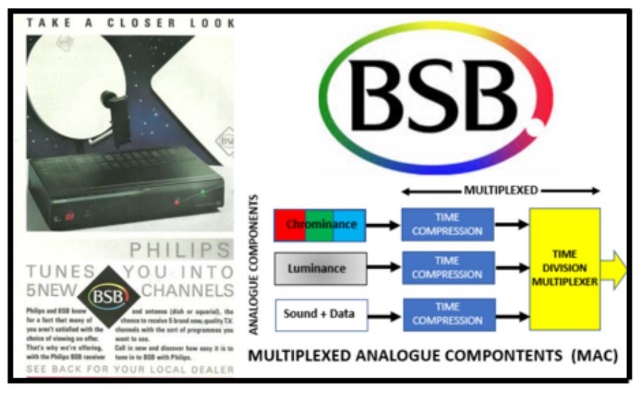
However, even this far more credible effort was allowed to be torpedoed by Rupert Murdoch launching his Sky satellite service to the entire UK market in 1989,14 months ahead of BSB. He was able to do this by blatantly ignoring the MAC directive and using, instead, the much cheaper old PAL TV standard. It gained him a significant cost and time to market advantage. It was to lead to the collapse of BSB.
Co-conspirator was the Luxembourg Government, who ignored the international radio regulations and allowed ASTRA to use frequency bands set aside for telecommunications satellites. That was the regulatory loophole he had used to get around the MAC directive. The Thatcher government was ambivalent. It saw nothing wrong with a heavily regulated BSB having to compete head-on with an unfettered Rupert Murdoch planning his Sky satellite service as he wanted. The European consumer electronics industry were furious. They had been led to invest in the new MAC standard. The EU Commission and the French, German and Dutch governments viewed Rupert Murdoch as having cheated and should be forced to follow the same rules as everyone else. In December 1991 the Commission tabled the second MAC directive at a Telecoms Council Meeting specifically to close the regulatory loophole he’d used.
This came at a particularly inopportune time for Rupert Murdoch. BSkyB was losing money, it was threatening the finances of the entire News International Group and the last thing they needed was to be forced to replace one million satellite receivers.
By coincidence, I attended the 1991 December Council meeting on an entirely different matter. A colleague from our IT Division assisted the UK Minister on the proposed MAC Directive. I watched his face as the President went around the table asking each country if they supported the proposed Commission measure. One by one, starting with France, they came out in support: it was essential for European industry... it would create a clear path for high-definition TV... and so on. By the end, every country had expressed their full support – except the UK. This was not a formal vote. Its purpose was to give the Commission a first indication that they were on the right lines. Had it been a vote, we would have lost it 11 to one. As a Single Market measure, the result would then be legally applied in the UK (and Luxembourg). My IT colleague was visibly shaken.
I came into work one overcast day in February 1992 to be told by one of my staff that I was to be given the job of doing something about the proposed second MAC Directive. His eyes rolled to the ceiling as he spoke. I had not been consulted. Nobody else wanted to go anywhere near it. I was staring at a dossier that had ‘failure’ stamped all over it. The bigger picture was also a mess. The Commission were trying to shut the stable door after the horse had bolted. BSB had collapsed and been forced into the arms of Sky. The MAC route to HDTV was flawed. Meanwhile the US were making huge strides with digital television. I was tempted by the longer-term challenge of what might replace a failed MAC route to HDTV. On the other hand, the job of fighting off the second MAC directive looked hopeless. It was a poisoned chalice.
I had a real choice to make: either go through the motions of defending BSkyB’s interest in Brussels or make a real fight of it. The 11 to one indicative vote told its own grim story of how this was likely to end, so I would have lost no credibility just going through the motions. However, I could see a chink of light. Having led the reform of European telecoms standards making, I had back-door access to every senior official who mattered in every telecoms ministry across Europe. The chink of light was whether I could leverage my relationships to forge ‘a blocking minority’. It meant an alliance of two large countries and a small country. It was long odds and only something I was likely to risk if I was passionate about the cause.
I wanted BSkyB to succeed but not at the price of pushing everyone else out of the UK TV broadcasting market. The rest of the UK TV industry were shackled by regulations. Murdock had shown his contempt for the rules in a ruthlessness to win. He had a corrupting relationship with ministers. It was not the sort of corruption that involved suitcases of pound notes. They did his bidding free of charge. They feared his media interests, and TV is a very powerful media. BSkyB looked very much like a cuckoo arriving in the nest. That was not a cause to die for.
It was one of those lonely times of having to decide whether to take on a huge gamble. In fact, I would be placing two bets, the first was that I could kill the second MAC Directive against the odds and the second was whether something could be put in its place that offered a better route to HDTV, almost certainly digital and done in a way where BSkyB would not be dominant. The picture was exceedingly fuzzy.
A week or so later, I had top News International officials calling on me. They were led by a very senior executive called Andrew Knight. They were tense and primed for some heavy lobbying. The tension evaporated when I made it clear that I was already committed to fighting their corner in Brussels and I had a game plan for doing it: form a blocking minority and don't compromise. We had to bring the proposed directive down.

We quickly moved on to who would do what. Their role would be the media campaign and lobbying broadcasters. They were keen for digital television to be the centrepiece of the propaganda. Why was Europe still tying itself to old-fashioned analogue TV when the future was digital? My role was to fashion the blocking minority of governments behind the scenes.
It took me no more than two weeks to get senior officials from Spain, Ireland, Denmark, and Luxembourg into my office. The votes of Spain and Denmark added up to the equivalent of one large country, and Ireland was my small country with a one-vote margin to spare from Luxembourg. It was probably one of the more unusual blocking minority alliances in EU history. But I had the numbers, it was game on.
The Commission soon got wind of the rebellion, so did the other member states who supported the measure. The pressure was piled on the Commission from both sides. The Commission were due to submit a revised version of the draft to the June Council to take into account the views of the member states. Time for our minister to get involved. The Commissioner responsible was an Italian called S Pandolfi. Our minister was Edward Leigh. A call was set up between the two of them. Edward Leigh handled it very well. He soon cut through the fluff and flannel put up by Commissioner Pandolfi. Under great pressure, the Commissioner finally accepted removing the part that would have banned PAL broadcasting satellite transmissions. I know this to be a fact. I was the DTI official listening in on the call.
The minister and I were delighted. It was to be short-lived. The French got wind of the Commission’s caving in. They wheeled out their big gun for a phone call to Commissioner Pandolfi. It was no less than the formidable French Prime Minister Édith Cresson. It must have been some conversation. S Pandolfi caved in – again.
The Commission tabled their new draft and Action Plan just before the next Telecommunications Council in June 1992. It had not been changed one jot. The French had got their way. Our reaction was a mixture of disbelief and fury. But it had not improved the chances of being approved. My blocking alliance held together.
Officialdom on both sides of the channel more or less closes down for the whole of July and August. Who was going to blink first?
In late summer, I was visiting Peter Kahl, a very senior German official in the Telecoms Ministry. We were planning some activities in the European Telecommunications Standards Institute, which had nothing to do with television. We were just wrapping up when Peter Kahl said that his minister would like to speak to me about the MAC Directive. I was taken by surprise. This was unusual.
I was wheeled into the German minister’s office. The first thing I learnt was that the Germans were not that fixated with the MAC TV technology. Their support was a mixture of some industrial interest (one of their semiconductor manufacturers was making the MAC TV decoder chips). Partly it was showing solidarity with the French. However, I sensed there was also a deep moral outrage. The German minister told me that he had been personally promised by the Prime Minister of Luxembourg that the proposed Astra satellite would not be used for direct-to-the-home satellite broadcasting. It would only feed cable TV head-ends. This assurance led the Germans not to object when Luxembourg registered the orbit slot for Astra.
The German minister then went into sales mode. I got a half-hour pitch on the virtues of changing the shape of TV screens from the established 4:3 ratio to a wide screen 16:9 ratio (width to height). The Minister had been shown the difference by a German TV set manufacturer and had been impressed. He was shaping up his plan B in the event of the MAC Directive’s being lost. Industry would be compensated by a huge funding programme to subsidise making TV programmes in 16:9 format. The good news was that the Germans were now in neutral on the Directive. However, I knew a massive new funding programme from Brussels would go down like a lead balloon with our Treasury. I told the minister I would convey his ideas back to London.
Another lull in the battle. Unknown to me, the Germans were on the move. History was about to be made.
In November 1992, a cold front extended across Europe. It was snowing in London. I got a surprise telephone call from Peter Kahl from Germany. He felt that Europe was letting the US run away with the new digital TV technology prize. Would I be interested to attend an informal meeting together with French officials to discuss what Europe could be doing to be better prepared for digital television? The date he gave me was only a few days away. I agreed and was on a plane to Bonn. The meeting was held in an old historic building in Konigswinter. Deep frost lay on the ground as my taxi swept me up to the door.
Over dinner, we discussed progress on the digital TV technology. The US was powering ahead with some proprietary digital TV technologies. In parallel, the International Standards Organisation was making a lot of headway with an open standard called MPEG2. Throughout the dinner, I could sense the French official was ill at ease.
After dinner, Peter laid out his plan to form a European industry standards body to wrap a European TV broadcast standard around the emerging open MPEG2 video coding standard.
The French official’s face hardened. ‘How could Europe possibly be credible in its efforts to get high-definition TV based on the MAC analogue technology if it was also flirting with digital TV technology?’ he demanded, ‘It would confuse industry’. The French official added that there was no way he could agree to this.
Peter looked crestfallen. I then spoke and pointed out that I did not think the MAC technology was going to succeed and Europe could finish up losing out twice. This encouraged Peter to re-run his arguments. The French official got even more obdurate and referred to an earlier meeting on the matter I was not aware of. It occurred to me that the reason I had been invited was that Peter’s digital TV initiative had stalled before it had even got off the ground. He needed my help.
I knew exactly what was bothering the French official. His Prime Minister had gone over the top of the trench with a full-frontal charge to get the MAC Directive approved. News International were running a propaganda campaign that Europe was backing the wrong horse. If the meeting was leaked to the media, they would have a field day, with words like hypocrisy and two-timing being thrown around liberally. If it were known that a senior French official had been a party to all this, he would be for the chop.
It was time for frankness. I explained to Peter why I thought what he was proposing was not wise for the French official to agree to. I said that it would be a gift to the UK to deal an absolute political knock-out blow to the Commission's draft MAC Directive. The French Official nodded vigorously. On the other hand, there was no need for the UK to employ such low tactics. We already had a secure blocking minority. What was really at stake was a high-level political embarrassment factor, but that was only a matter of timing. We all knew the digital TV technology was coming. Why not make a European success of it – another GSM? I was willing to promise to keep this meeting a secret until after the December EU Telecommunications Council.
Peter Kahl looked hopefully towards his French colleague. A secret initiative? To my surprise (and admiration) the French official agreed. The trust between us had allowed the very first seed of a European digital broadcasting revolution to be planted. A huge opportunity was to emerge from a near disaster of Europe’s locking itself into a second-generation analogue TV broadcasting standard.
In great secrecy, the initiative drew in the public service broadcasters of the three countries. In my case, it was the BBC and NTL. The colleagues from the BBC and NTL were sworn to secrecy. Peter Kahl would become the chairman, and the French official and I became vice chairmen. True to my word, I said nothing to DTI ministers. I saw it as just a timing issue and not material.
Showdown time arrived finally in December. Ministers from across the EU arrived in Brussels for the Telecommunications Council. The UK minister for this occasion was John Redwood. He was relishing the fight. Before the Telecommunications Council began, I made my way down a corridor to the UK representatives' office. A French ministry official intercepted me. Would I mind speaking to his minister who was standing nearby? First the German minister and now the French minister? I had a good idea what he wanted. I agreed. What took me aback was 15 minutes of the French minister begging me for the UK to change its mind... yes, begging! Why was he doing this? The answer was obvious – fear! The formidable Madam Édith Cresson, the French Prime Minister, had probably made his fate clear in lurid terms if he dared to come home without getting the second MAC Directive agreed. For him, it was a desperate measure for desperate times.
The Telecommunications Council meeting began. Each country had three seats at the table. The central seat was for the minister. On one side of the minister sat our permanent diplomatic representative. I sat on the other side of him. I could sense John Redwood tensing, ready to get stuck into the debate.
The agenda item on the draft second MAC Directive was introduced by the European Commissioner, S Pandolfi. The Presidency then proposed a discussion. John Redwood reached forward to press the button on the microphone to signal that he wanted to speak. Before his hand could reach the button, my hand flashed out and grabbed his wrist. ‘Not yet, Minister,’ I hissed. He looked startled. I whispered, ‘Let the other side speak first, then your speech can counter any points they make, and the neutrals will more easily remember the last person who spoke.’ He nodded. Only then did I reflect that grabbing a minister's wrist was not exactly what civil servants are supposed to do. But it was good advice. The French minister gave a very powerful speech but had then shot his bolt. John Redwood had got the point and waited for all the other ministers to speak. He then gave an excellent speech. The arguments were good and delivered with passion. I watched the faces of the other ministers, and I could see he was having an impact.
And what an impact! When the votes were counted, the proposed draft directive was rejected by an 11-to-one majority. The French were the minority of one. In a little under 12 months, I had turned around an 11-to-one majority in favour of the measure, with the UK in splendid isolation, to an 11-to-one majority against, with the French in splendid isolation. That is what I call job satisfaction! I am happy to give John Redwood’s speech the credit for the thumping majority.
On my flight home, I imagined I could hear a yelp from the direction of Paris as the Prime Minister of France, Madam Édith Cresson, dealt with a French minister who had failed her.
The European Launching Group moved quietly ahead in early 1993. The French and Germans wanted to bring in the Dutch. I said that if the Dutch came in, so should the Spanish, as they had been staunch allies in my blocking minority. Then the Italians were invited in.
One of the problems with secret initiatives is that an appearance is given that nothing is happening. This led Astra, the satellite company, to take a very public initiative to form a group of private satellite broadcasters to promote digital TV broadcasting in Europe. Peter Kahl phoned me to discuss what to do. My relations with News International were excellent after the win in Brussels, and I knew that, as Astra’s largest customer, they could influence Astra. I agreed to work with him to persuade Astra to drop their initiative and join ours – a partnership of European private and public broadcasters would be enormously powerful. I set up a meeting with Peter Smith from News Corporation. He was their technology guru. He was supportive. What I offered was to structure the DVB to deliver a standard to their commercial needs on a timescale they would set. He was confident of bringing Astra onside.
A meeting then took place between Peter Kahl and I and top SES Astra executives. Armin Silberhorn was also there. He and I were in the old comrades in the GSM Gang of Four. He was now working for Peter Kahl.
Both sides quickly agreed that the European digital TV standards should be based upon the emerging MPEG 2 video decoding technology. But SES Astra still had reservations. No public service broadcaster had made any commitment to roll out digital television anywhere in Europe. On the other hand, BSkyB and Canal Plus had made public commitments to launch digital broadcasting. Wouldn't a joint group merely provide a means for the public service broadcasters to slow-up and frustrate their private sector competitors?
It was a fair point. The issue beneath the surface was whether the digital TV capacity would be used for many lower definition digital channels or much fewer HDTV channels. The public service broadcasters were more interested in HDTV. I proposed that the standards making should be market led. Everyone could be involved in creating the standards, but only those committed to investing would define the objectives and have the final say on any contentious matters. It delivered the commitment I had made to Peter Smith from News Corporation. It also put Europe on a two-stage process to HDTV but I was confident that the digital technology could generate enough capacity to eventually be able to do both.
The principle was agreed. Armin Silberhorn and I went away to draw up the constitution embodying these principles for a new Digital Video Broadcasting Group that would replace the European Launching Group. There would be a commercial group sitting alongside a technical group drawing up the standards. The commercial group would establish the market-led objectives. The technical group would then be tasked with writing a specification that met those objectives.
After the meeting, Peter Kahl said that all this secrecy was becoming a joke. He had a queue a mile long outside his office of entities that had heard what was going on and wanted to be part of it. We would have to make a public announcement soon. I asked him to hold off as I had not even informed my own ministers yet on what had been going on.
My cue to bring ministers up to speed occurred when John Redwood presented to the House of Commons the outcome of the Telecommunications Council meeting. He gave his victory speech, much to the delight of all the Tory Eurosceptic right-wing backbenchers.
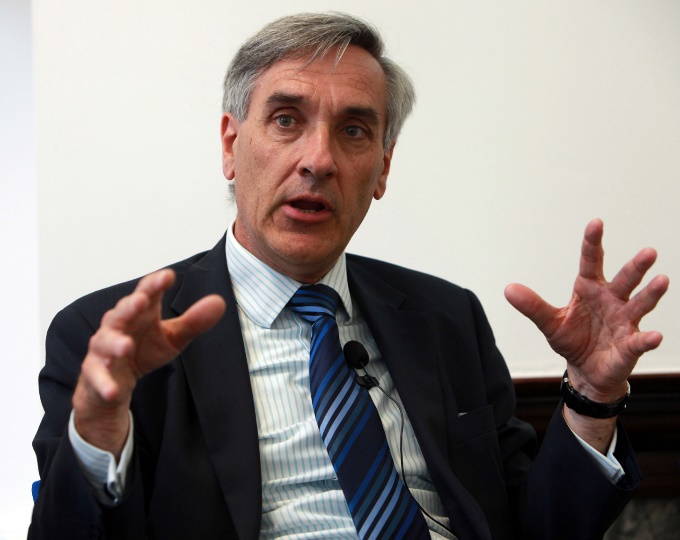
Afterwards, John Redwood was glowing with pride. He had brought Brussels to heel. It was time to profit from his obvious good humour, which was rare when it came to his dealings with officials. I said that now he had vanquished Brussels’ efforts to hold Europe back on the old analogue technology, the way was open for Europe to come together behind the new digital TV technology. In less than a microsecond, his good humour vanished. He snapped back at me that there was to be no European initiative on digital TV standards. The choice of technical standards had to be left entirely to the free market. This was classical free-market ideology that might work well in the PC market, but it was wrong for a public network market. Even in the US, the land of the free, public standards in telecommunications are norm for very good reason.
I was speechless. It was abundantly clear that if I said anything, I would only dig myself into a deeper hole. It was deep enough as it was. Not only was there already a European initiative on digital TV standards up and running... but I was its vice chairman. He was the minister and had now given me a direct instruction for the UK to walk away. I was in a fix.
My last boss in the Home Office was an ex-Air Commodore who used to use the phrase ‘doing a slow roll’ whenever a solution was not immediately evident to him. Better than making a wrong move. Over the next few days, I imagined myself in the seat of a plane flying somewhere over the South of England, slowing banking my plane in a never-ending series of slow rolls. It was ironic that my gentlemanly gesture to my French colleague to save him from his minister's wrath was the only thing now saving me from the wrath of my minister.
There is something to be said for ‘doing a slow roll’. A few weeks later came an unexpected ministerial re-shuffle. John Redwood was gone from the DTI. In came Michael Heseltine as President of the Board of Trade. He quickly established industry-facing sponsorship branches. I was made head of the branch to deal with the Telecommunications, Radio and Broadcasting industries.
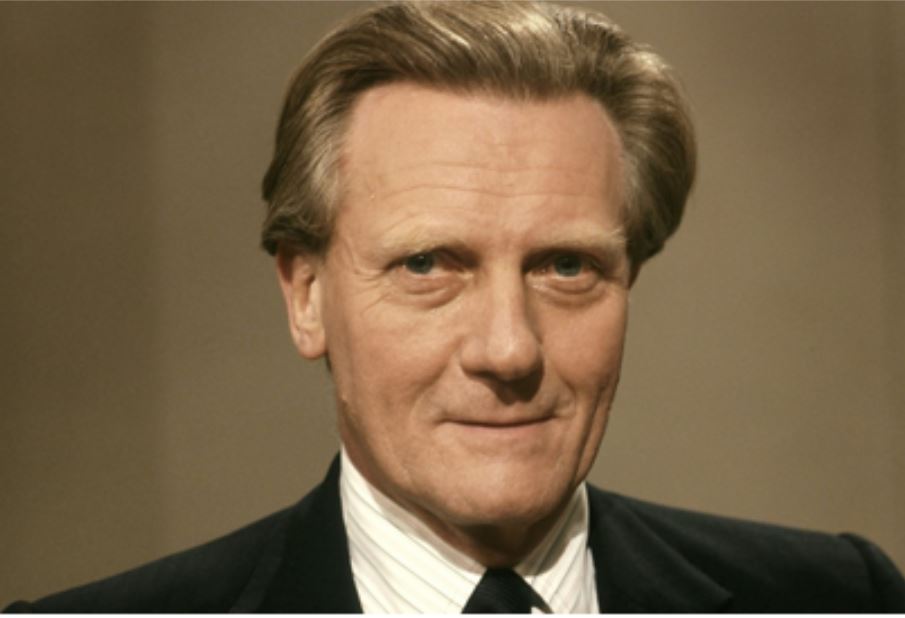
The first meeting I had with Michael Heseltine to review his priorities could not have gone better. He said that Europe needed to move quickly on digital television and thought a European initiative should be organised on the matter. It was quite unexpected. I thought it prudent to mutter something about doing my best.
I waited a decent number of weeks and then put up a note to him that said he would be pleased to know that a European initiative on digital TV broadcasting was now under way. Within a matter of days, the creation of the Digital Video Broadcasting (DVB) group was announced by Peter Kahl in a press release.
Michael Heseltine must have thought I was a miracle worker, whereas the truth was that I had just fallen out of my imaginary plane and had the luck to land on a haystack farmer Heseltine had just placed in the field.
DVB was formally launched in September 1993 and it turned into a highly successful industry standards making group. I structured it to send its technical specifications to ETSI for formal processing into recognised standards. This ensured the broadcasting industries and telecoms industries could work cooperatively rather than as rivals. All the lessons I had learnt from the painful Intellectual Property Rights issues that came out of GSM and caused so much grief in ETSI were put to good use in DVB. The man from IBM turned up to oppose me, as he had done successfully in ETSI with their ill-fated IPR policy (See Chapter 33). But I was not going to let him spoil the smooth passage of the next generation of broadcasting technology in the same way. I told him if he was up for a fight, so was I. He beat a hasty retreat. My approach was to force the major industries towards a patent pool by mandatory arbitration being the default option in the event of no patent pool. They hated the idea of mandatory arbitration, so they formed a patent pool. It allowed the DVB digital TV technology to enter the market without the huge court and other battles that came to bedevil the mobile phone industry.

The European initiative had gone well. Rupert Murdoch was already in gear and would have, courtesy of the Duchy of Luxembourg, a free, unimpeded road into the UK domestic TV broadcasting market with hundreds of digital TV channels with a UK-wide footprint. The heavily regulated UK terrestrial broadcasting establishment appeared fast asleep to the dangers of BSkyB becoming the dominant digital TV platform in the UK. None of my colleagues were unduly concerned, but to me it just looked wrong. Something had to be done, the highly fragmented cable TV companies were focussed on digging up the streets. Their commercial goal was to attack BT’s telephone business. I mentally wrote them out of the script. That left only one option – the digitalisation of the UK’s well established analogue terrestrial TV networks. It would be a huge undertaking.
I now had to wheel around from the Brussels battlefield to Whitehall. It was much less familiar territory for me personally, but the job I had started was still only half done.