
Part FourBroadband Internet
PART 4 – BROADBAND INTERNET
Quote: A world-class fixed digital infrastructure needs a world-class regulatory framework that geographically differentiates where competition works and where it doesn’t. (Section B Rule 4The Ten Rules — Rule 4)
Context
The UK Conservative Government in the 80’s made it a priority to introduce competition in fixed wireline networks. Mercury were given a license to become the challenger to BT but the parent company, Cable & Wireless, seriously uninvested. Their challenge to BT never amounted to much. A second strand of the policy was to create the conditions to attract inward investment from the US to roll out cable TV networks. The prize was BT’s local telephone business. BT tried to head this off by offering to invest billions in fibre-to-the-home but only if they were allowed to carry entertainment TV. The Government refused and a very fragmented cable TV industry began the expensive task of digging up Britain’s pavements to lay ducts and cables. The final drop to consumers’ homes comprised a copper wire for the telephone service and a coaxial cable for TV. Meanwhile the cable TV companies found their TV proposition could not compete effectively with BSkyB’s satellite services driven by their monopoly in pay TV. This triggered a consolidation of the cable TV industry.
The largest cable TV company to emerge was ntl. They held their own in the market by bundling the telephone and TV service with a free “dial-up” Internet access. But the extraordinary high levels of borrowing brought things crashing down. The parent US company filed for bankruptcy in 2002. The company had burned through $11 billion of shareholders money, $14 billion in junk bonds and $8 billion of bank debt.
Fixed network competition was bought at an expensive price but the benefits have been significant as this inside account of the launch by ntl of the UK’s first broadband internet illustrates.
Chapter 28
ACCELERATING THE ROLL-OUT OF BROADBAND INTERNET IN THE UK
The Internet began its life as a public network through ‘modems’ converting data into analogue signals to send over the telephone wires. The sole providers of data modems had been the telephone monopolies like BT. The UK led the way in the EU in liberalising data modems so consumers were free to buy them from anyone. It was one of the factors that contributed to the success of the Internet. It brought prices down and accelerated the pace of increase in data speeds. One of my first jobs in the DTI in 1984 was to lead the negotiations for this liberalization. The rise of the Internet in the UK was given a further massive boost by the UK regulator OFTEL. A quirk of how OFTEL regulated access to BT’s copper wires by rivals allowed a disruptor, Freeserve, to offer a free Internet service over BT’s wires and still make a profit. This forced everyone else to follow. This was to lead to the UK’s having one of the highest Internet penetrations in Europe. For business customers wanting higher data speeds and needing a service less prone to congestion, BT offered their Integrated Services Digital Network (ISDN) product. It offered two 64 kb/s and one 16 kb/s data channels but was way too expensive for the consumer market. The large corporate customers would buy private leased wires for their connection to the Internet. That was how access to the Internet was accomplished throughout the ’80s and ’90s.
In 1999, the US cable TV companies began rolling out the first standardized cable modems for broadband Internet. These offered higher data speeds than telephone modems. They also offered a very compelling new feature: they were always-on. The consumer no longer had to dial-up a connection every time they wanted to access the Internet. The US telephone companies were spurred into the market with their own broadband Internet access service using Asymmetric Digital Subscriber Line (ADSL) technology. The US broadband Internet access market was on the move. But nothing was stirring in the UK. The UK market was happily bubbling along with ‘free’ Internet using dial-up telephone modems, and BT was raking-in excellent profits from the business market with their ISDN service.
One morning in early 2000, the ntl Director of Operators, Chris Skudder (a US ex-pat), was copying a paper on a common photocopying machine just outside my office when he noticed my door was open. He wandered in and asked my view on cable modems. We both agreed they looked a compelling proposition. He asked if I had any ideas on how we could get this going in ntl. I said that I could get my technician to put together a technical trial if he could provide a member of his staff to work-up ideas for the supporting commercial proposition. Once we could show people the proposition, we might find ourselves pushing at an open door. This conversation was to prove the genesis of broadband Internet being launched in the UK.
We socialized the idea of this small trial, and it got wide support, except from the digital TV development team. They wanted their TV set-top box offering ‘interactive services’ (now running very late) to also offer access to the Internet. But they were outvoted on the UK Executive Board. My boss at the time, Peter Black, was a heavy hitter, and together with Chris Skudder, I had the air cover to press ahead with the small trial.
I knew little about Internet networking. I talked to an ‘expert’ in ntl’s Internet team who told me it was as simple as Lego. It lulled me into a false sense of security. Nevertheless, ever prudent, I told our purchasing people to let the contracts where Cisco, who were to provide the network equipment, should also procure the consumer cable modems from a company called GI. In that way, I made Cisco responsible for making it all work end-to-end. What could possibly go wrong? I was to find out. The system was switched on at our cable headend in Guildford, and all of the trial modems fell over. Nothing worked.
To my shock and horror, behind my back, both companies had gone to our purchasing people and persuaded them to let two separate contracts, which left me in the middle with the responsibility to get it to work end-to-end.
My technician and I were on our own, and everyone watched from a distance. It can be very lonely when things go wrong. I could hear the gales of laughter from the digital TV team.
When the consumer cable modem was attached directly to the Cisco headend equipment, it worked perfectly. However, when we put our network in the middle, the system fell over. This was surprising as our network was supposed to be a ‘modern’ cable TV network. I got my technician to do a lot of measurements. Alone in my office, I plotted the measured data in coloured ink onto a cable network map. There was a fuzzy pattern. Certain street cabinets seemed to be implicated with the non-functioning modems.
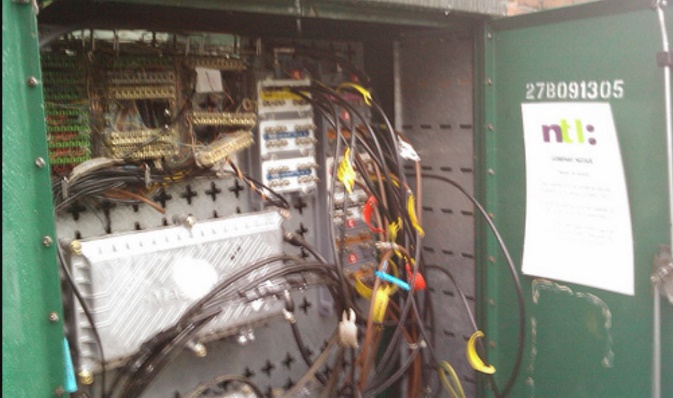
I sent my technician to take a close look at those cabinets. Inside was a horror story of loose cables and rusty joints from poor maintenance. There had been no routine maintenance since they were installed. The ‘radio noise’ generated by loose and rusting connections in relatively few cabinets was being fed back up the ‘tree and branch’ cable TV network and drowning out the wanted signals arriving at our Guildford headend. The cabinets were cleaned up, and the broadband Internet worked perfectly. My uncompromising message to the Board was: clean up the cabinets and keep them clean or walk away from cable modems. A £5m programme was authorized for a nationwide clean-up of ntl’s street cabinets.
The Digital TV Group were no longer laughing when they realised that the same thing would have happened to their ‘digital interactive services’ when they were launched but, in their case, on a huge scale and in public.
We moved into technical trials. I was one of the volunteers to try the service. I knew instantly we were onto a winner. Aside from escaping from the chore of dialling-up each time I wanted to go online, I was getting a much better service working from home than at the office using the overloaded corporate local area network.
Another row broke out with the Digital TV Group when I took the decision to adopt the US cable modem standards called Data Over Cable Service Interface Specification (DOCSIS). There was a European cable modem standard under development called Digital Audio Video Council (DAVIC) produced by DVB. Our Digital TV Group had selected this standard. They were furious about my decision. It may also seem a surprising choice given my background – I was a co-founder of the DVB standards group. But I have never believed in coming second to market with a new standard that simply does the same thing another way. The US market was now driving the volumes, and it made sense for cash-strapped ntl to tap into the falling prices of their cable modems. It would allow us to connect up more customers for the same money. It was the right call, as who has heard of DAVIC today?
We moved on to commercial trials, and my colleague, who was leading the commercial trial, put up on our website the roll-out plans for full commercial deployment. Within a month, BT, who had been dragging their feet deploying their own ADSL-based broadband Internet, suddenly announced their own broadband deployment. And if the reason for this was not already clear, they were targeting our precise roll-out locations. We had fired the starting gun on BT’s broadband Internet.
To understand why BT had done nothing until we arrived became clear in a telephone call I was to get three months later. The switchboard used to put calls through to me if they involved any advanced technology issues. One day, the phone rang, and a very nervous voice at the far end explained that he was a small businessman. He had recently taken our 500 kb/s broadband Internet service. He had just received the monthly bill for £30. That’s right, I said. But his last bill from BT for their ISDN service was £250… Was he doing anything illegal? I chuckled and told him he was fine and to just enjoy our service. BT had been creaming astronomical profits from their ISDN service. There was no way BT was going cannibalise such a lucrative business until we appeared over the horizon with a vastly superior offering at a fraction of the cost.
The competitive broadband battle between ntl and BT that I had helped to trigger began in earnest. Meanwhile, the competitive battle in the US was heating-up. The cable TV companies were winning considerably more customers. But they were also being greedy and not investing in upgrading the capacity to match their growth. As a result, data speeds were slowing down to a crawl in busy periods. The US telephone companies saw their chance for some negative advertising. Just how dirty it had become can be summed up by the headline of an advertisement run by one of the telephone companies that read: “Cable modems equal Crap”. They all spun a quite misleading story that congestion was ‘inherent’ with the cable modem technology as the cable was a shared wire (which is true). What the Bell companies did not say was that they had had the same bottleneck of shared capacity as the cable companies. It had just happened a bit further back in their architecture.
I detected the first sign of this propaganda battle spilling over to the UK when a BT spokesperson spun the same misleading story in a media article. I was outraged. It had me working on a plan to put a stop to this, and I quite unintentionally wrecked BT’s broadband Internet business plan at the same time.
BT were loading 50 consumer customers on one unit of bandwidth at the bottle-neck. (We call this the contention ratio). For business customers, who were asked to pay far more, the contention was set at 20:1. It meant in the busy periods, the business customers got far less congestion. I set down the engineering rules for ntl’s cable modem service so that our consumers were given the same contention ratio BT was giving to its business customers (20:1) but at a fraction of the price the business customers were paying. I also instructed the engineers to set the modem caps to 600 kb/s for our advertised 500 kb/s service. ‘Delight the customers’ was my philosophy. It worked. The ntl customers were delighted. BT’s black propaganda against our service fell flat on its face. It caught BT out in both its business market and consumer market. We were massively undercutting BT on price in their business market and massively outclassing them on quality in their consumer market. Whoever in BT’s marketing department authorised that “dirty tricks” media article lost BT a small fortune.
The BT bear had been woken up, but the timing could not have been worse for us. ntl’s US parent was heading for bankruptcy. A new CEO, Stephen Carter, was brought in to try to turn things around. McKinsey consultants crawled all over us. They came up with 87 recommendations that all had to be implemented in weeks to save the company. It was a hopeless plan that took no account of an organisation that had become internally chaotic, staff working flat out and morale on the floor. Being in a company running out of money is an appalling place to be. We were all just putting one foot in front of the other, wondering how long the ground would stay firm.
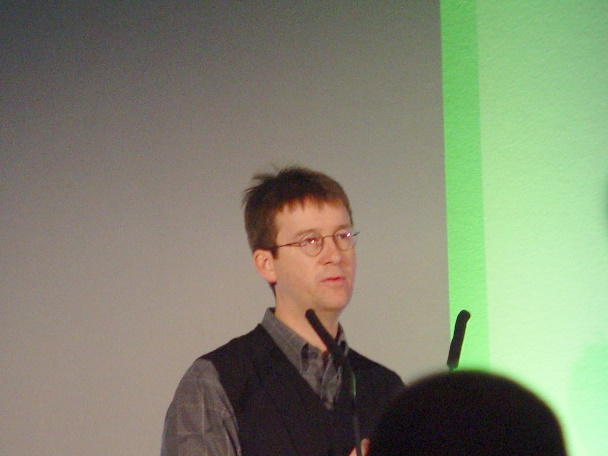
Restructuring a company on the scale needed is usually done by a very small team answering directly to the CEO. One morning I found myself drafted into that small team. I was called into the new CEO’s office with a colleague called Leigh Bennett. We were told we were being made acting joint managing directors of the 6,000-strong Technology Division. We were so taken aback that neither of us thought about asking for a pay rise. Leigh was to handle the day-to-day operations. I was put in charge of breaking up the Technology Division, handing many of the functions over to the local franchise directors, and then the residual networks division was to be downsized by a massive 40%. It was an awful job, but the one redeeming feature was that I understood what was necessary to keep the ship afloat and what was dead wood. I knew that continuing to roll out the new cable modem service was essential to keep the ship afloat.
Breaking up the 6,000-strong Technology Division just needed a clear head and a good small support team. In six weeks, every single person knew where they reported and their job description. I was then made the sole managing director of the new Networks Division, with the task of downsizing it by 40%. This was no easy task for an organisation under enormous day-to-day operational pressure.
Most organisations facing downsizing put a freeze on recruitment and offer a package to tempt enough volunteers. They only move on to compulsory redundancies where there are not enough volunteers leaving. The problem with this approach is that generally, it is the best people who take voluntary redundancy as they find it easiest to get another job. It also leaves the organisation under a cloud of uncertainty for longer. The approach I took was to cut out whole functions and processes that we would have to manage without and not accept any voluntary redundancies from the key technical staff we needed to keep the broadband Internet show on the road.
As an illustration of this approach, ntl had found the need to appoint nearly 30 project managers to navigate projects through all the chaos the company was in from over-extending itself. It was the legacy of taking over too many cable TV companies with no pause in between to bed each one in properly. For the same reason, ntl also employed 80 account managers to look after our big business customers. This left the poor overworked engineer on the bench run ragged by all his managers. A project manager would turn up demanding priority for his project, only to find an account manager coming next day making a conflicting demand. His line manager would then tell him off for not doing the jobs he had asked to be done. I made redundant all the account managers and 80% of the project managers. I made the line manager solely responsible for setting staff priorities. The responsiveness of the networks division shot up.
Over the previous five years, ntl had made periodic efforts to reduce staff numbers to contain costs, but it never seemed to be any easier to find a place in the car park, as one part of the business was laying off staff as another part was recruiting. The cuts we were forced to make to save ntl from bankruptcy passed the ‘car park’ test.
This provides the backdrop to how ntl’s broadband Internet (with our new cable modems) not only survived the trauma of the Chapter 11 process but prospered. I ensured that the teams working on it were not disrupted. Our nervous suppliers were dealing with the same faces confident in their jobs. One of my senior engineers was doing a ‘lift and shift’ of cable modem equipment from areas of slower growing data traffic to areas of rapidly rising data traffic to maintain the high quality of our service. In a world where time to market is critical to the difference between success and failure, I sustained ntl’s fast time to market. This allowed ntl to re-invent itself as a leading broadband Internet company. It made ntl worth saving as a going concern.
The broadband Internet was to be my last tick in the box in contributing to the UK journey of digitalising its communications infrastructures: cellular mobile, satellite TV, terrestrial TV, cable TV, sound broadcasting and now broadband Internet. Along that adventure, I very rarely saw the same people, which has given me the unique distinction of probably being the only person of my generation to have had a hand in shaping all of them.
Retrospective – How well did things turn out?
It is not easy to market a new product for £30 a month where it is replacing a product that ‘ free’. The hunch that consumers would find the always-on attribute and higher data speeds compelling turned out to be right. In fact, the initiative came to transform the UK telecommunications market. ntl fired the starting gun of a competitive UK broadband market as BT were forced to roll out their own DSL broadband product. Ofcom was to add to the competitive fizz by unbundling BT’s copper wire local loop, allowing competitors, such as Talk Talk and BSkyB, to offer retail broadband services. This drove down prices and in turn drove-up penetration.
Cable modems turned out to be central to the survival of ntl. Its telephone service was a “me too” product. Its cable TV was a weak competitor to BSkyB. For a time ntl held its own bundling its telephone and cable TV with a free Internet connection. But BSkyB’s digital satellite service more than neutralised this. What remained was a compelling broadband service with a good “quality of service” reputation.
An unintended side-effect of the rise of the broadband Internet was to bring to a halt the inroads the mobile network operators had been making into BT’s and ntl’s telephone business. More and more consumers had been cutting their wire connections and going mobile only. It looked as if ultimately everyone would connect wirelessly and copper wire connections would become redundant. The broadband Internet reversed this. The mobile networks could not keep up in the race for capacity and data speeds and consumers’ wireline connections became impregnable to the attack from the mobile operators. WiFi on the end of wireline connections even came to the rescue of the mobile operators when their 3G networks become overwhelmed by the rapidly rising capacity demand. Suddenly “mobile pure play” championed so strongly by Vodafone became not such a good idea. I was instrumental, together with my Boss in Vodafone Jens Schulte-Bockum (a hugely inspiring person to work for) and Mike Walker, research director, in convincing the company that mobile was always going to lag fixed connections in a race for high data speeds. The future lay with having both. We changed the strategic direction of Vodafone.
These were positive achievements and the fruits of competition. But it is a glass half-full. The other half of the UK fixed wireline market has been having to make do with an underperforming monopoly.