The Timeline
Before the phone, a place on the airwaves
Europe’s mobile story began with a problem that railway officials already knew well: how could a radio keep working across national borders? In 1966, the International Union of Railways asked for shared frequencies. Finding just 21 frequency pairs took until 1975.
By then, a wider shortage of mobile frequencies was pressing. Europe’s spectrum managers had raised it in their R21 group in 1973. Looking towards 900 MHz offered room to grow, but international radio rules first had to change. At the 1979 World Administrative Radio Conference, European countries secured a mobile allocation in that band. There was now an opening. What should they build in it?
The space that made GSM possible →
Follow the railway request and international negotiations that opened a path towards a common mobile system.
Nine countries sit down in Paris
In Paris, experts from nine countries compared their plans for public mobile services. They were imagining very different futures. The Nordic countries expected 160,000–200,000 customers by 1990, perhaps more. The UK did not expect to reach 200,000 before 2000.
The technology was unsettled too. France was studying a digital system; the UK suggested an analogue approach. Many participants thought digital speech coding would need another ten to fifteen years. Yet the discussions opened the possibility of developing a common system for the new spectrum. Cooperation could reach beyond sharing frequencies to sharing the service itself. The next question was who would undertake that work.
From shared frequencies to a shared ambition →
Read how Europe moved from finding spectrum to agreeing what a common mobile service could become.
A common ambition gets a working group
In November 1982, the mandate for GSM was accepted within CEPT, the European body for postal and telecommunications administrations. A special group of experts would take on the task. Its scope mattered: GSM could define both the radio technology and the network behind it.
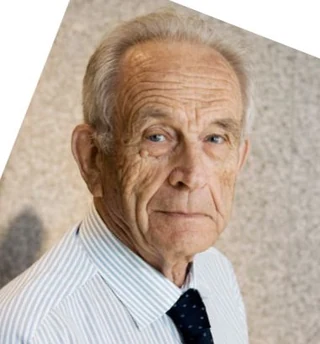
Thomas Haug chaired GSM as ideas came in from laboratories, manufacturers and universities. Alongside the standards work, France and Germany agreed joint digital cellular trials in 1984; Italy joined the cooperation in 1985 and the UK in 1986. A common ambition was taking institutional shape. Choosing which technology would carry Europe’s calls was still ahead.
The partnership behind the standard →
Stephen Temple describes the research agreement that brought competing national ambitions into a common undertaking.
Agreement begins on handwritten pages
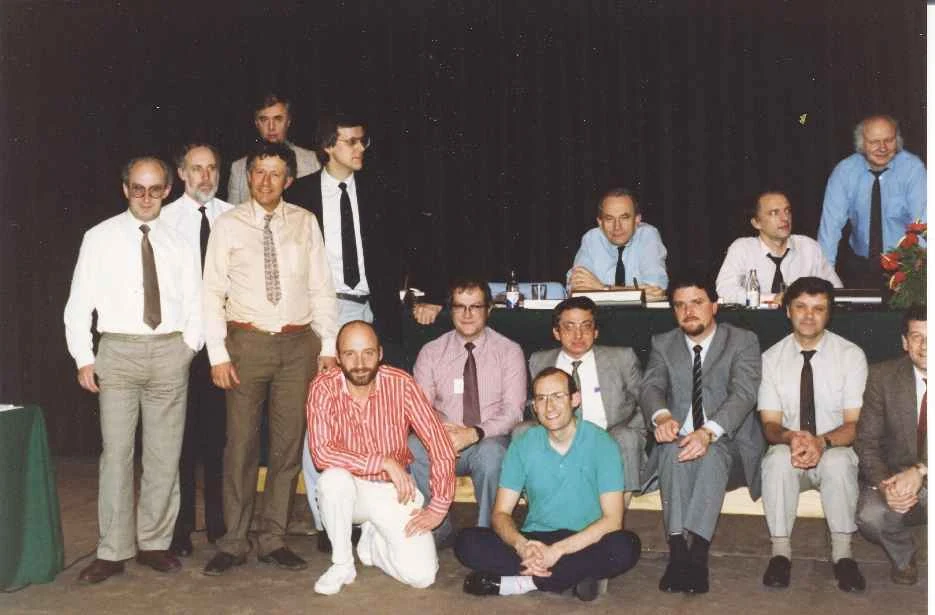
The trials led to Madeira, where GSM had to choose the basis of its radio standard. France and Germany backed wide-band TDMA; most other countries preferred a narrow-band approach. Even those favouring narrow-band did not all agree on its form.
No final common choice emerged. But the meeting did produce narrow-band working assumptions that France and Germany could support without giving up their preferred approach. The details were set down on handwritten pages. These were a basis for further work, not a finished standard. The engineering discussions had moved forward; securing the political backing for a single system was the next task.
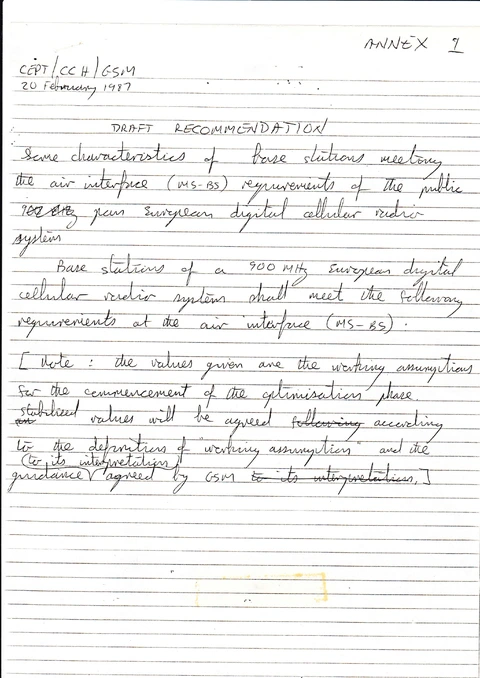
Read the Madeira working specification →
Inside the Madeira negotiations →
Follow the arguments and working assumptions that kept a common radio standard within reach.
Four governments commit to one standard
In Bonn, ministers from France, Germany, Italy and the UK gave the project political backing. Their declaration supported a single standard, specified the technology and committed the four governments to take the measures needed for services to open by 1991.
This was an intergovernmental agreement, building on the earlier research partnership. It also required a change to the modulation method in the Madeira working assumptions. Engineering and politics were still being brought into alignment. Crucially, ministers called for a Memorandum of Understanding ready for operators to sign in September. Government support could set a direction; operators would have to invest in the networks.
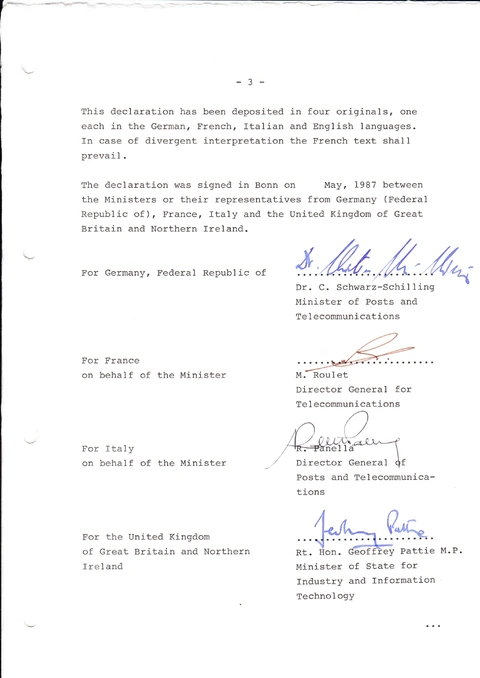
Read the Bonn declaration →
The turning point at Bonn →
Go inside the ministerial meeting that gave the technical work political backing and set operators a deadline.
Thirteen operators put their names to it
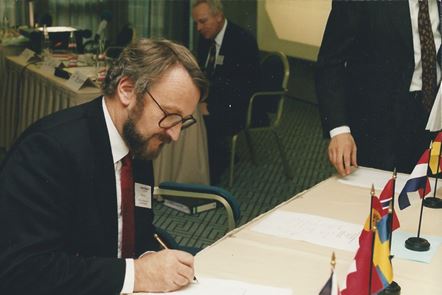
Thirteen operators from twelve countries signed the GSM Memorandum of Understanding on 7 September 1987. A shared technical ambition now had a practical counterpart: an agreement to implement networks, with an annex setting out phases and milestones.
Stephen Temple had drafted the MoU; Ib Loenberg chaired the Copenhagen meeting that brought it to signature. Portugal’s authorisation arrived during the lunch break. Spain followed around a week later. Each operator signed its own page, added to the agreement. The commitment could grow as others joined. Now came the work that signatures alone could not accomplish: completing the specifications, building networks and producing phones that worked on them.
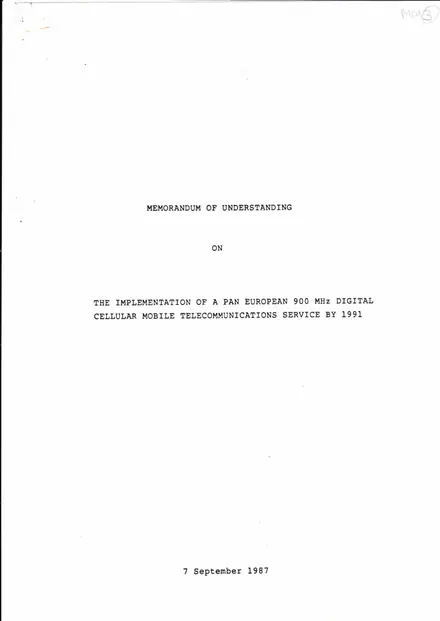
Read the original GSM MoU →
The signatures behind the networks →
Read how the GSM Memorandum of Understanding turned an ambition into a shared commitment to build.
The networks were ready. Where were the phones?
GSM needed much more than a radio link. Jan Audestad led the network-side work, with Michel Mouly and Christian Vernhes among its key contributors. Bernard Mallinder headed a full-time team accelerating the specifications. Roaming, switching and moving calls between base stations all had to fit together.
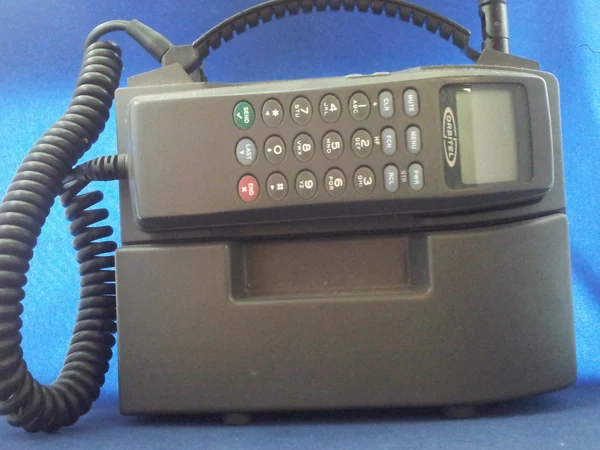
In 1991, networks were ready but approved phones were not yet available to supply to customers. Stephen Temple recalls driving to Putney Hill to find coverage and making a call on an Orbitel handset. GSMA’s timeline records a GSM call by Radiolinja in Finland that year. Successful calls, however, were only one kind of first. Manufacturers produced phones in early 1992, but delayed test equipment held up approval: proving that a handset worked was not enough to put it on sale. European administrations agreed interim approval arrangements to break the logjam. On 10 November 1992, Nokia launched the 1011. After years of agreements, tests and delays, GSM was reaching customers as a phone they could actually buy.
From working calls to a working market →
The specifications were only part of the task. Follow the practical obstacles between a successful test and a phone customers could buy.
A European phone meets an unexpected border
A phone designed to cross European borders had run into a border of its own. Australian official Bob Horton rang Stephen Temple to ask why Britain had blocked a GSM export. Temple had not even known anyone was exporting it to Australia. He recalls discovering that a GSM encryption algorithm fell under rules used for munitions: permission covered CEPT Europe. Australia was outside it.
Temple went to GCHQ to resolve the restriction. But permission to export left a larger question: could GSM become international if countries outside Europe were excluded from shaping it? Horton had already challenged that exclusion. Temple had fought for associate membership of ETSI, the European standards institute. Operators beyond Europe could gain a voice in the standards work, rather than simply adopt decisions made elsewhere.
Manufacturers carried GSM into new markets, and a phone improved for one country could find buyers in many others. That shared market rewarded smaller handsets, longer battery life and new features. Falling prices brought mobile ownership within reach of people far beyond the original business customers. Younger owners could join in too—but a phone bought with pocket money still left its owner watching the cost of a call. A few written words offered another way to keep in touch.
How GSM crossed its own borders →
Explore the export restrictions, international participation and growing market that carried GSM beyond its European beginnings.
When pocket money joined the network
For those new owners, keeping in touch need not mean making a call. Kevin Holley’s 1991 paper described a practical frustration: someone wanting both phone calls and text messages had to carry a phone and a pager, pay two subscriptions—and still could not send a text back. GSM’s design brought two-way messaging into the phone. Personal communication was already part of the plan.
Around 1995, more GSM networks were connecting their messaging services, while prepaid access and cheaper phones were opening mobile ownership to new customers. Young people could now afford to join in—and reach friends on other networks. With a text costing less than a call, their pocket money bought more chances to keep in touch. A service designed into GSM was becoming an everyday habit because the connections and the economics had caught up with the invention. Yet chatting was only part of the original vision: Holley had also imagined messages that could tell equipment what to do.
The people behind SMS →
Meet the engineers whose work made two-way text messaging part of the mobile phone.
Two votes for a different kind of telephone
While GSM was still being built, Ed Candy and Rod Gibson were looking towards the next generation of mobile phones—the research that would lead towards 3G. Their vision was a phone carrying calls, pictures and information: “one pocket telephone does the lot”. But in 1987, Europe’s RACE research programme was looking towards fibre to the home. Their mobile proposal did not fit. With budgets under pressure and some member states fearing a threat to fledgling GSM, rumours reached the team that the bid was about to be rejected.
An unnamed secretary found a way through. She called the secretary of research director Roland Huber and secured an urgent meeting. Candy and Gibson caught the next plane to Brussels. Candy recalls a long, intensive debate with a sceptical Huber, a committed supporter of fibre to the home. By the end, Huber was prepared to put the project back before the committee. Funding survived the vote that followed—by a margin, Candy remembers, of just two votes.
The funding was a beginning, not a finished standard. Sixteen years later, Candy was UK technology chief as 3 opened commercial services in Britain and Italy. Then the balance shifted dramatically. His account describes H3G’s traffic mix in 2007 reversing from 90% voice and 10% data to 10% voice and 90% data, even as voice traffic grew. People were still talking; the network was carrying far more than conversations. The researchers had imagined a versatile pocket phone, but not the information world it would open.
Inside the 3G revolution →
Edwin Candy recalls the precarious research bid, the standardisation work and the networks that made the multimedia ambition real.
A new network, before the new phones
The mobile Internet already existed. The harder ambition was to carry much more of it, with shorter waits and lower network costs. Work on that problem had begun well before H3G’s 2007 data surge. Yet another technological upheaval was hardly an easy prospect: in his preliminary LTE history, Stephen Temple links the industry’s early caution to the financial damage from Europe’s 3G spectrum auctions. The next system would have to offer more than an impressive speed demonstration.
Hiroshi Nakamura helped encourage a bolder ambition at New Orleans in 2002. Existing 3G radio channels left limited room to grow; engineers began considering a wider path for the traffic. Alcatel brought back a radio approach whose unresolved problems had kept it out of 3G. It now offered the prospect of a better connection near the edge of a coverage area, as well as more capacity. International teams in 3GPP turned such proposals into the shared LTE specifications: faster responses and more efficient networks, designed to work alongside earlier systems.
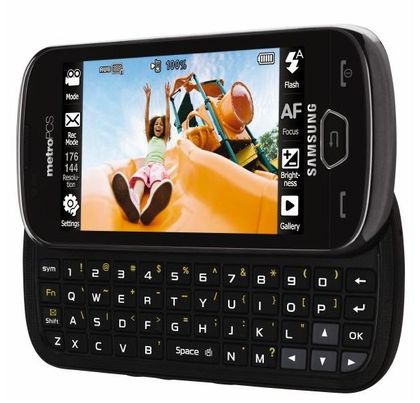
On 14 December 2009, TeliaSonera opened commercial LTE services in central Stockholm and Oslo. Its customers’ first route into this new network was a Samsung modem for a laptop; LTE handsets followed. The operator was offering more room for activities such as video and online conferences away from a fixed broadband connection. Marketed as 4G, this was early LTE, before the later LTE-Advanced standard. The ambition had reached paying customers—but first in two city centres. Making broadband fast and making it widely available were still different achievements.
Shaping the 4G revolution →
Follow the workshops and technical choices behind LTE, from cautious beginnings to a more ambitious radio system.
Speed was not enough
By 2015, the race for dazzling 5G speeds had converged on a particular patch of spectrum: 28 GHz. But the satellite industry needed it too. Stephen Temple’s eyewitness account describes European regulators backing satellite interests at that year’s World Radio Conference, leaving Europe’s mobile industry without its hoped-for route. The rival priorities ran so deep that arranging the spectrum working group’s first face-to-face meeting took nearly two months.
Ofcom’s Philip Marnick redirected the discussion: what problems did industry need to solve? Temple and colleagues worked towards a three-band answer: 700 MHz for wide coverage, 3.4–3.8 GHz for a balance of reach and capacity, and a higher band for concentrated demand in hotspots. For that highest band, 26 GHz was proposed, but the choice was still disputed. The aim was to serve people across a country as well as a crowd in one place.
Then, minutes before submission, a senior Commission official told Temple not to send the papers. A proposal about networks appeared inconsistent with the Commission’s focus on applications. Temple remembered 1987: Lord Young had stopped him from making his planned journey to Copenhagen to get the GSM MoU signed, pending a policy review. He drew on that experience to explain, respectfully, why spectrum advice could not wait. After two email exchanges, the objection was lifted. The proposal went forward; Europe’s 2016 pioneer-band approach ultimately brought together 700 MHz, 3.4–3.8 GHz and 26 GHz. The search for one spectacularly fast band had become an agreement to meet several different needs.

Breaking the spectrum deadlock →
Stephen Temple recounts the competing interests and last-minute objections behind Europe’s pioneer-band approach.
Why build another generation before this one reaches everyone?
A faster network is little comfort when the connection disappears indoors or on a journey. In June 2025, the University of Surrey’s 6G Innovation Centre in the UK published a research vision centred on service people could depend on, rather than another speed record. Its proposed network of networks would bring mobile, Wi-Fi, satellites and potentially fixed broadband together, using their different strengths instead of expecting one system to do everything. Moving smoothly between them remains unfinished work. For the AI-enabled services the researchers envisage, a connection available when needed could matter more than a spectacular peak speed.
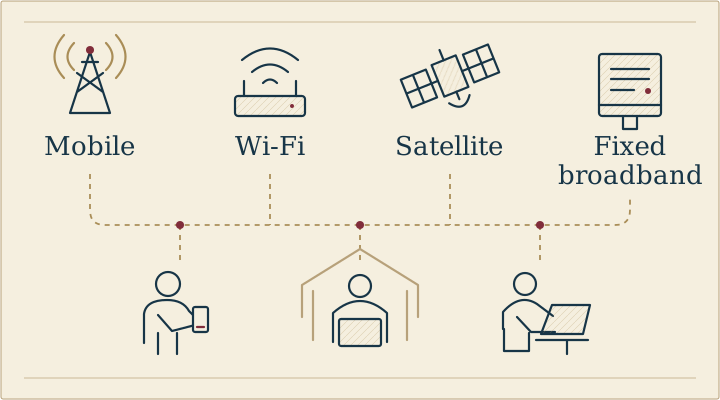
The proposal even looks down the spectrum, towards a possible 600 MHz coverage layer, after the pursuit of capacity had drawn attention upwards. Lower frequencies could help reach more places; making that spectrum available would require policy decisions, not just new equipment. But better coverage alone does not answer who pays. In Stephen Temple’s 6G account, suppliers need orders to fund development, while operators have sharply different investment capacities. A technically impressive system could still fail to attract the buyers needed to build it at scale.
Temple proposes two ways forward within a shared global framework. One would improve existing 5G networks at a cost more operators could afford, putting coverage and dependability first. The other would allow a bigger technological leap where demand and investment justified it. The aim is for networks to keep working together even when their owners cannot all move at the same pace. Surrey’s selective approach shares that concern, but is a separate proposal; neither scheme is internationally agreed. Without such flexibility, an expensive upgrade could leave poorer communities further behind, while national rivalry could pull standards apart. The alternative is worth working for: connections that could bring learning, work and healthcare within reach of more people, and help families and emergency services stay in touch when disruption strikes. GSM showed what became possible when governments, operators and manufacturers found common ground despite competing interests. Can they find it again, making progress affordable as well as ambitious? The prize would be a world where a person’s address matters less to their chances of learning, earning or getting help—and where the connections we build bring more people into that shared future.
Everything 6G →
What should the next generation of mobile communications deliver, and who will be able to afford it? Explore the competing visions, spectrum choices and investment challenges shaping 6G.
Stay with the story
The inside story →
Go behind the meetings, disagreements and unlikely breakthroughs that brought GSM into being, told by someone who was there.
Who created GSM? →
A revolution of this scale was never the work of one person. Meet the people whose ideas, decisions and persistence made GSM possible.
The agreement behind the networks →
Read the original GSM Memorandum of Understanding: the operators’ commitments to procurement, roaming and a coordinated European service.
What if GSM never happened? →
How different would mobile communications be if Europe had failed to agree on a common standard? Explore the alternative history.