Chapter 23
GSM and the 7 mobile radio revolutions
Why did GSM succeed so spectacularly?
Certainly GSM was a classic piece of good industrial policy that can be summed up in a brief paragraph:
European Governments set a strategic vision for the future mobile public infrastructure in an area of demonstrable market demand and radio channels were reserved for this purpose. A new technical standard emerged in a timely manner. Industry had a choice as to whether to invest in new mobile infrastructure using the new spectrum (or not). If they did, the condition was to use this common technical standard. A means was found to spark the competitive energy of the private sector to successfully deliver a public good – a compatible mobile radio service right across Europe with sufficient scale economies to put the benefits of this in the hands of ordinary consumers.
It followed the two rules of good industrial policy -
- that if the public policy case exists to intervene then Governments must intervene decisively and comprehensively – half interventions are worse than no interventions
- A sense of urgency is applied to get the technology to market on-time
But there was clearly more to the GSM outcome than just an intelligent well-judged industrial policy.
The enormous energy driving GSM forwards was also due to the fact GSM was no less than 7 separate mobile radio revolutions, all inter-twined and happening to come together at the same time.
Pulling apart and identifying these separate strands helps to illustrate why GSM was so transformational on both the industry and the market:
Revolution 1 – Analogue to Digital
There is a very long-term trend in modern electronics to move from analogue to digital technology. Underpinning this has been the incredible pace of advance of silicon integrated circuits.
But there was nothing inevitable about mobile cellular radio networks going digital end-to-end. The massive installed base of analogue based networks, or terminals or services has its own momentum, and it is never easy to write off the sunk cost. For example in 2009 the wire line telephone voice signals sent to most people's homes are still analogue. Across Europe television is still being received on analogue TV sets in many homes.
Not only did GSM establish the digital mobile technology in the market but it comprehensively swept away Europe's analogue mobile analogue networks into the dustbin of history in a remarkably short time.
Revolution 2 – From monopoly operator to network competition
The UK already had cellular radio network competition with its analogue cellular radio networks, but it was the sole exception. In the rest of Europe the monopoly telecommunications operator provided mobile services. The argument ran that one single larger national mobile network would be cheaper than two smaller mobile national networks and a single mobile operator would use radio frequency channels more efficiently. There is some truth in this. Where this defence proved no longer tenable was that by 1989 the UK's number of mobile radio subscribers was 5 times bigger than that of Germany. Lord Young presented these numbers in a statement he made in the House of Lords that year on the success of mobile competition in the UK. This was the evidence needed by the pro-liberal sentiment sweeping across Europe.
GSM technology arriving on new frequency channels provided the opening for new market entry. It became the opportunity point for all EU countries to introduce cellular radio network competition. The result was the transformation of the markets in France, Germany, Italy, Spain and elsewhere creating growth, jobs, much improved business efficiency and, of course, the demand that drove GSM up the success curve.
Revolution 3 - From a National to a Global Service
Prior to GSM (and outside of the Nordic countries) mobile radio was regarded as a purely national thing. The operator’s territory was national, the network was therefore only national, the choice of technology was a national prerogative, the customer base entirely based in the country (with no doubt exceptions of a few rich visiting businessmen) and the supply industry was local, if it had the capability.
After GSM the licensing basis of GSM remained national, but the Memorandum of Understanding effectively federated all the national GSM networks into a single virtual European network service open to all European mobile phone subscription customers. This got extended later to most of the rest of the world. It became an important reason for selecting the GSM technology which got re-enforced with each new country opening GSM networks.
The GSM roaming model is a marvel in its own right. Within a few minutes of stepping off an aeroplane, a person's mobile phone has hunted around to find the network with the best signal, it has requested a service connection, the selected network has signalled to the customer’s home network to validate the customer and the home network has sent a set of codes to allow for secure connection/billing whenever the customer then wants to make a telephone call. The customer’s mobile phone attaches itself temporarily and securely to a local mobile phone network in that country.
The added bonus abroad is that with this “hunting for the best network” feature a foreign customer enjoys a much better mobile phone coverage and reliability than they ever get at home
This small miracle extends in the other direction. Anybody in the world can phone that customer on his or her mobile phone (without ever having to consider whether they are at home or abroad) and that call will be delivered anywhere in the GSM world where the customer is visiting.
Today we just take all this for granted.
Revolution 4 – Professional electronics to Consumer Electronics
Mobile phones started life as very expensive equipment produced in relatively low volume. Whilst a number of large companies made mobile phones in 1984 there was also space for small to medium sized players as well.
The turning point for the industry can be traced back to the DTI “Phones on the move” consultation document for GSM at 1800 MHz. It was not the first to have the vision of everyone carrying a personal mobile phone connected to a mobile network built for this purpose. But it was the first to come out of a credible organisation and the leadership to say...and now we will make it happen.
The conditions were created to flip the mobile phone business model from a wide area mobile network supporting relatively few (mostly business) customers with expensive mobile phones to dense urban area networks supporting a mass consumer market with cheap mobile phones. The scale economies created by GSM then made the demand side of the business model to work. Mobile phone annual production increased from the 100’s of 1000’s to the 100’s of millions by the mid-90's. The price of personal mobile phones fell from £2000 in 1986 to £20 each by 2006. Along the way innovation by the mobile phone operators in the service pricing model to “pre-pay” provided a further fillip to the mass take up of the mobile phone. This completely changed the character of the mobile phone supply industry from professional to consumer electronics.
Once the very dizzy pace of technical advance led to tiny GSM phones having standby times measured in days rather than hours the mobile phone passed its next milestone on its way to becoming a consumer product – good styling and design. The Nokia 8800 series introduced towards the end of 1999 was a sign that a consumer market was well in place.
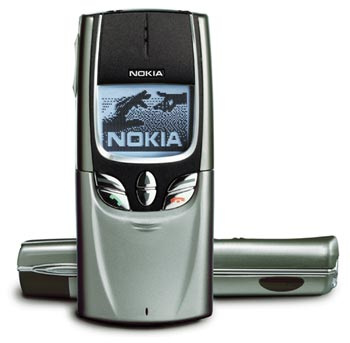
The consumer electronics industry is a radically different proposition. It is a huge component sourcing, large scale manufacturing and high volume global distribution business. It is a game for the giants and even the largest can catch a cold as a consumer electronics business has to be finely tuned to mass customer taste and fashion. This can be very fickle.
The mobile phone has become the most likely carried item after the wallet and house keys. This fact has spurred innovation to pack other functions into the mobile phone and other industries have seen their product sucked into mobile phones and given away free, for example digital cameras or MP3 players.
Revolution 5 – From car-phones to personal mobile phones
The reason for the rise of the personal mobile phone has already been explained above. But this does not entirely explain the death of the car phone that would have offered better performance out of towns and avoided the hassle of car kits that were tied to specific mobile phones.
The car phone might have survived if mobile radio operators had allowed a customer to have two SIM cards for the one subscription and car manufacturers had been given more incentive to integrate mobile phones in cars.
The solution that prevailed was the personal mobile phone with a hands free kit for the car. With GSM came the death of the car phone.
Revolution 6 – From Voice to low data Multi-media
Analogue cellular radio was limited largely to a voice telephone service. Modems could be rented to run over the analogue mobile phones, but the costs were high and the data rates limited to only hundreds of bits per second.
GSM came along and offered, in addition to voice, both a text messaging and a stunning (for the time) 9.6 kb/s data service. This is to be compared with a typical telephone modem over a fixed telephone connection in 1984 running at 1.2 kb/s to connect computers together.
Around this time 2.4 kb/s modems over telephone lines were only just being introduced. Thus GSM was a very big leap forward in data communications at the time. There was even a row in GSM over a speed as high as 9.6 kb/s as this threatened the very lucrative private wires that were on offer over the fixed networks at exorbitant prices in some countries.
The data speed of GSM has been expanded over the life of GSM. When it hit 56 kb/s with the arrival of GSM-GPRS this ignited a lot of new multi-media possibilities in mobile phones. This in turn stimulated the demand for new mobile phones.
A further evolution of GSM came in the form of EDGE technology that has stretched the data speeds to 200 kb/s or so, but this development collided with the introduction of 3G technology to address specifically the rising demand for ever higher mobile data speeds.
An even bigger transformation occurred with SMS text messaging. SMS is the biggest text messaging community in the world and much larger than any of the proprietary Instant Messaging communities on the Internet. A lot of the industry were taken by surprise with the popularity of SMS with school children but with the cost of a mobile phone call being many times higher than the cost of an SMS text message...it should not have been that much of a surprise that those on limited budgets would fall upon text messaging with such alacrity.
Revolution 7 - From a wired to a substantially unwired telephone world
In 1984 the total number of mobile voice telephone calls was a tiny dot compared to the huge universe of wire-line telephone calls. By 2001 some 40% of calls to or from people at home were via their mobile phone – even though a cheaper wire-line alternative was nearby.
At the heart of a number of these revolutions has been the transformation of “the business model” of the mobile phone operators from selling a high priced service to a few to selling a much lower priced service to the many. The last 5 years has seen the emergence of another radical change in “the business model” of the mobile radio operators from pricing of calls per minute to flat rate pricing models...the mobile revolution continues.
This begs the question as to whether Europe could create the necessary condition for another GSM type success?